首页
课程
问答
CTF
社区
招聘
峰会
发现
排行榜
知识库
工具下载
看雪20年
看雪商城
证书查询
登录
注册
首页
社区
课程
招聘
发现
问答
CTF
排行榜
知识库
工具下载
峰会
看雪商城
证书查询
社区
Android安全
发新帖
7
33
[原创]从调用级并发到 Guest Thread Runtime:unidbg 单后端线程语义的重建
发表于: 2026-7-23 23:24
2241
[原创]从调用级并发到 Guest Thread Runtime:unidbg 单后端线程语义的重建
mxystery
2
2026-7-23 23:24
2241
# 从调用级并发到 Guest Thread Runtime:unidbg 单后端线程语义的重建 > 本文讨论的是 unidbg 在单 Unicorn 后端下模拟多线程 native 程序时的通用架构问题。文中的线程、调用、网络回调、状态节点和返回值均为抽象示例,不对应任何具体应用、接口、命令编号或业务数据。 本文承接前文[《从时间片轮转到调用级并发:unidbg 单后端多线程架构重构》](https://bbs.kanxue.com/thread-292016.htm)。上一篇把调度单位从 `Task` 提升到了 `Invocation`:每次 native 调用拥有独立 record、generation、context、terminal、outcome 和 JNI local-reference scope,并通过 FIFO 在真实 safe point 上完成 backend 交接。 继续实现后,笔者又从 Invocation-Owned Runtime 改成了 Guest Thread Runtime。 原因不是时间片不能工作,也不是调用级并发方向错误,而是笔者逐渐发现:**一次调用有了独立身份,仍然不等于运行这次调用的 Android guest thread 已经被正确表达。** 宿主 Java 线程、guest Android 线程、一次 native invocation 和临时驾驶 Unicorn backend 的 carrier,是四种不同身份。只要其中任意两层仍被混用,系统就可能在看似正常的调度日志下共享错误的 TID、TLS、stack、JNIEnv、pending exception,或者把一次临时让路误判成调用已经完成。 这篇文章不再讨论某个调用如何“多跑一会儿”,而是讨论另一件更基础的事:在只有一个 backend 的前提下,如何建立一个作用域正确、失败可隔离、并且能够被合同测试证明的 guest thread runtime。 项目地址:<a href="elink@84cK9s2c8@1M7s2y4Q4x3@1q4Q4x3V1k6Q4x3V1k6Y4K9i4c8Z5N6h3u0Q4x3X3g2U0L8$3#2Q4x3V1k6E0P5s2W2G2L8#2u0Q4x3V1k6#2L8X3W2V1j5X3N6Q4x3X3c8E0N6h3I4@1K9i4c8Z5M7X3g2S2k6r3W2F1k6H3`.`."><mark class="encrypted">959K9s2c8@1M7s2y4Q4x3@1q4Q4x3V1k6Q4x3V1k6Y4K9i4c8Z5N6h3u0Q4x3X3g2U0L8$3#2Q4x3V1k6E0P5s2W2G2L8#2u0Q4x3V1k6#2L8X3W2V1j5X3N6Q4x3X3c8E0N6h3I4@1K9i4c8Z5M7X3g2S2k6r3W2F1k6H3`.`.</mark></a> --- ## 摘要 整个演进可以分成三代。 第一代是 native timeslice。C 后端按照指令预算主动停止,Java 调度器保存 Task 上下文,再选择下一个可运行 Task。它解决的是:**多个 guest Task 如何获得执行机会。** 第二代是 Invocation-Owned Runtime。它引入调用 record、generation、FIFO admission、exact terminal、immutable context 和 invocation-scoped JNI local references。它解决的是:**多个重叠 native 调用如何不串结果、不串上下文。** 第三代是 Guest Thread Runtime。它进一步引入 Run、GuestThreadIncarnation、TaskThreadBinding、ThreadBirthRecord、StackRegion、InvocationContinuation、CarrierLease、AdmissionReceipt、RetirementReceipt、StateStore 和 ReadinessAuthority。它要解决的是:**一次调用究竟运行在哪个 guest thread 上,谁临时拥有 backend,线程级状态属于谁,调用结束后又由什么证据证明资源可以释放。** 核心结论可以压缩成四个不等式: ```text Host Java Thread != Guest Android Thread Carrier Task != Guest Android Thread Invocation != Guest Android Thread Observed Role != Guest Thread Identity ``` 新的设计不试图在单 backend 上伪造真 SMP,而是用确定性的交错执行,重建线程身份、调用栈、JNI 作用域、事务边界和跨节点证据。 --- ## 一、为什么第二代仍然不够:Invocation 不等于 Guest Thread ### 1.1 第一代:从“等 safe point”改成“由 backend 主动停” 最早的 unidbg 多线程问题,是 worker 虽然已经创建,却很难获得稳定的执行机会。协作式调度依赖 syscall、JNI 回调和函数返回等偶然 safe point;如果当前 Task 长时间不主动让出,其他 Task 就只能等待。 笔者先把它改成 native timeslice: ```text guest 执行固定数量指令 -> C backend 记录 TIMESLICE -> uc_emu_stop -> Java 保存当前 Task 上下文 -> 调度下一个 RUNNABLE Task ``` 这一步建立了可预测的停止原因,也让 futex WAIT/WAKE 和 worker 轮转第一次拥有了稳定的调度基础。 但时间片只回答“下一刻跑谁”。它不知道当前 Task 承载的是哪一次调用,也不知道一个返回值应该交给哪个宿主提交者。 #### 图一:原生时间片轮转 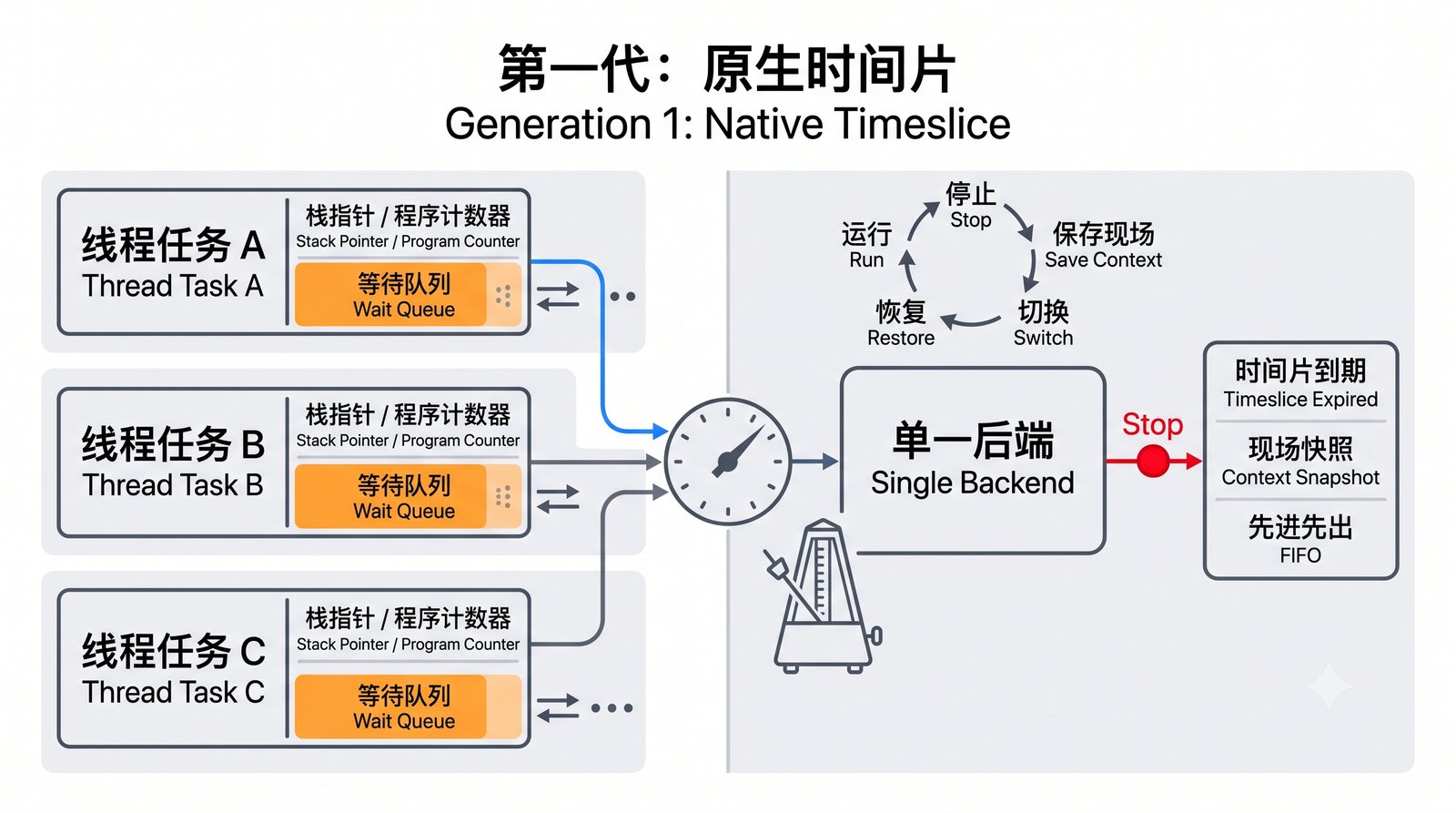 ### 1.2 第二代解决了什么:调用终于有了自己的身份 继续处理重叠调用时,笔者发现 command、last result、active context 和异常状态散落在多个全局槽位中。同一种调用连续出现两次时,仅凭 command 类别无法区分前后 generation;一个调用释放全局 JNI local refs,还可能清掉另一个暂停调用正在使用的对象。 于是笔者把系统改成 Invocation-Owned Runtime: ```text CommandInvocationRecord + generation + original submitter + exact carrier + immutable context + exact terminal/outcome + invocation local-reference scope ``` backend 仍然只有一个,但不同宿主提交者必须排队申请 admission。旧 owner 在真实 safe point 保存上下文并让路,新 invocation 才能进入;一次 backend stop 只表示交通交接,不能产生 `COMPLETED`。 这一步解决了调用级身份。两次同类 invocation 不再因为 command 相同而共用结果槽,旧调用也不能拿新 generation 的 terminal;一个 backend stop 只是 handoff,不再自动等于调用完成。 但第二代模型仍然默认了一件事:只要 invocation 拿到了 carrier、private context 和 local-reference scope,这次调用的“线程语义”似乎也就随之成立了。 继续实现后,笔者发现这个默认前提并不成立。 #### 图二:调用级运行时 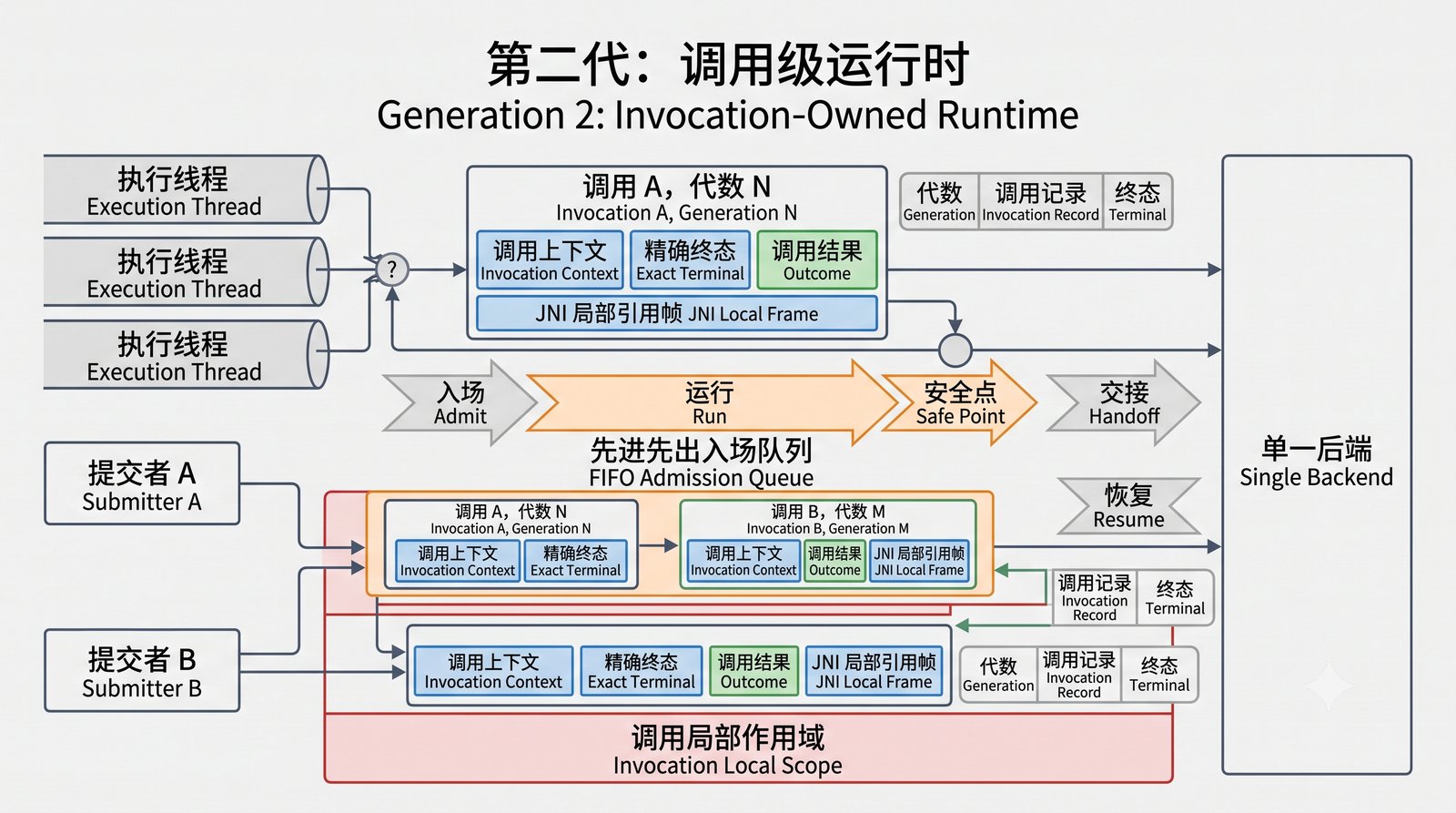 ### 1.3 第二版进入组合场景后,我们发现了什么 第二版完成后,单条 native 调用已经能够拥有独立的 generation、context 和 outcome。只看一条调用,系统的行为是合理的:提交、排队、进入 backend、返回、发布终态,各个步骤都有明确对象。 真正的问题出现在一次同步重入场景里。为了脱离具体应用,可以把它描述成下面这条完全匿名的运行: ```text RunContext(run-demo) -> GuestThread A 提交 parent invocation alpha -> alpha 进入 Java callback,并同步等待 child invocation -> GuestThread B 创建 callback child beta -> beta 进入普通 FIFO admission queue -> A 仍占有 parent carrier,等待 beta 返回 -> beta 等待 A 释放 backend,A 又等待 beta terminal -> process appears hung ``` 把对象身份展开后,第二版的循环等待是: ```text thread-A#1 -> invocation-A#1 (parent / alpha) -> CarrierLease lease-A#1 remains live -> Java callback waits for invocation-B#1 thread-B#1 -> CallbackInstanceId callback-B#1 -> invocation-B#1 (child / beta) -> AdmissionQueue waits for backend handoff invocation-A#1 waits for invocation-B#1 invocation-B#1 waits for lease-A#1 retirement ``` 这不是 backend 没有时间片,而是第二版把 child 当成普通 Invocation 处理,却没有把它建模成同一 GuestThread 上的可重入 child frame。A 必须等 B,B 又必须等 A 释放当前 owner,于是 parent/child 形成循环等待。宿主最终只能看到 future 超时或进程长期无响应。 更麻烦的是,host timeout 只结束了等待,不会自动结束 guest 执行。若调用者在同一个 Run 中立即 retry,旧的 `lease-A#1`、parent continuation、callback mailbox 和 JNI local frame 可能仍然存活;新的 `invocation-A#2` 又使用相同 command category 进入队列。此时卡死会继续演化成 carrier 饥饿、同类节点 receipt 混淆和资源滞留: ```text deadlock -> host timeout -> guest owner not quiescent -> retry enters same Run -> old continuation / JNI frame / lease retained -> starvation or memory growth ``` 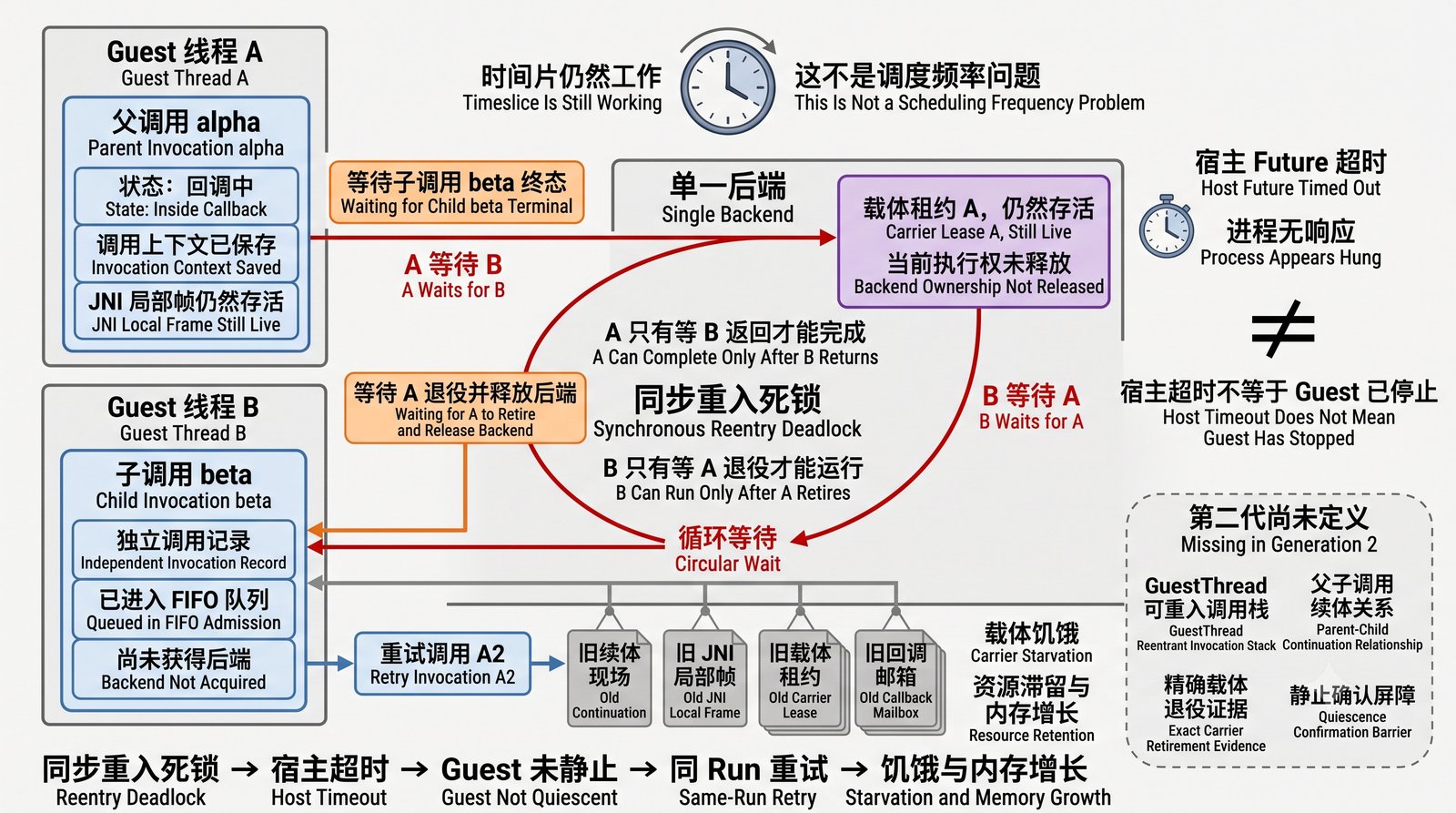 表面上,generation、parent/child record、FIFO handoff 和 JNI local frame 的单项测试都可以变绿。但最终边界真正需要回答的不是“有没有两个调用结果”,而是: ```text child 是否属于 parent 的同一 GuestThread invocation stack? 谁拥有当前 backend,谁可以安全 retirement? timeout 之后旧 Run 是否已经 quiescent? 哪个 receipt 属于 alpha,哪个属于 beta? 所有 callback state、continuation 和 JNI frame 是否已经提交或释放? ``` 第二版第一次让我们看清:**“每次调用互不串线”仍然可能在同步重入时形成进程级死锁;局部 generation 正确,也不能自动推出线程级调度、quiescence 和整条组合链正确。** 后面的六个现象,都是这条卡死场景在不同边界上的具体表现。 #### 1.3.1 同类调用都返回了,但最终边界仍可能认错节点 在上面的场景中,alpha 和 beta 使用同一种 command category。第二版能够用 generation 区分 `invocation-A#1` 和 `invocation-A#2`,却还不能说明“这次调用在场景图中承担 alpha 还是 beta”。 于是会出现一种很隐蔽的现象:前置调用全部返回成功,数量也对,最终边界却可能拿到同类节点中较早或较晚的一枚 receipt。表面上没有串 command,也没有串 generation;真正串掉的是 **scenario identity**。 这让我们认识到,业务图中的主键不能只是: ```text command + generation ``` 还必须包含由场景配置预先声明的 typed node identity。调用记录、admission、route、terminal 和后续 consumer 都要核对同一个节点,不能在消费阶段根据“最近一次同类调用”反推。 #### 1.3.2 命令返回不等于它负责的状态已经提交 第二个现象更像“alpha、beta 和 callback 都已经返回,为什么最终边界还是不 ready”。 原因是 native return、dispatcher terminal 和跨调用状态提交是三件不同的事。`invocation-A#1` 可以已经返回,但 alpha 的 host state 仍停留在 staging;`callback-B#1` 可以已经离开 Java adapter,但对应的 typed state 还没有和正确 instance 绑定;B 的 carrier 也可能已经停止执行,却尚未完成 dispatcher retirement。 如果最终边界只检查一组 `completed=true`,它看到的只是调用结束,不是状态闭合。真正的 readiness 至少要同时证明: ```text 正确节点已经进入 native + exact invocation 已经 terminal + producer state 已经 commit + carrier 已经 retirement + callback instance 已经绑定 + 没有 live waiter、continuation 或 lease ``` 这也是为什么第三版不再让 graph 自己拼布尔值,而是要求 authority 从多类 immutable receipt 中计算 exact closure。 #### 1.3.3 网络层的时间相邻,被误当成了 producer 关系 场景中的 `callback-B#1` 由异步会话边界触发。最初观察时,一段会话元数据和后续 callback 输入出现在相邻时间窗口、相同线程附近,很容易把它们理解成“前者经过某种转换生成后者”。 继续核对调用栈和对象身份后,我们发现两者只是相邻,并不是 producer 与 derived value 的关系:一条属于会话元数据查询,另一条来自独立 callback 边界。它们可以由不同对象、不同 instance 和不同生命周期产生。 这个发现改变了第二版中的状态传递方式。callback 不能借用前一条 command record,也不能从相邻元数据猜输入;它必须有自己的: ```text CallbackInstanceId + dispatcher-sealed current snapshot + parent invocation identity + callback admission receipt + instance-scoped committed state ``` 换句话说,**时间相邻只能产生 observation,不能产生 lineage。** 没有真实 callback producer 时,正确结果是 fail closed,而不是寻找一个形状相似的值填进去。 #### 1.3.4 同一个宿主调用者,不代表同一个 Guest Thread 第二版主要围绕 invocation 隔离,因此宿主提交线程、carrier Task 和 guest thread 之间仍容易形成隐含绑定。在简单测试里,它们经常一一对应,看不出问题;进入这条组合场景后,`thread-A#1` 连续承载两次 invocation,parent 又在 callback 期间临时让出 backend,`thread-B#1` 则使用另一份线程级状态完成 child invocation。 这时,按宿主 Java thread、command role 或 carrier TID 查找状态,就可能让业务表现出下面几类问题: - 重复节点恢复到了正确 context,却读取了另一条线程的 errno 或 pending exception; - child callback 返回后,parent invocation 的 JNI local frame 被错误关闭; - carrier 退役时连同持久 thread state 一起释放,后续节点只能重新猜测身份; - TID 被复用后,新旧 thread lifetime 被合并成同一条 lineage。 这些问题不会总是立即崩溃。更常见的表现是前置节点偶发缺状态、最终汇合长期等待,或者同一输入在 fresh run 和 same-run retry 中得到不同路径。 #### 1.3.5 宿主超时只结束了等待,没有结束 Guest 执行 假设 A 在等待 `callback-B#1` 时触发宿主等待上限。第二版已经能够把 timeout 归给 exact invocation,但我们进一步发现:future 返回 timeout,只说明宿主不再等了,并不说明 A 或 B 的 guest carrier 已经离开 backend,更不说明 continuation、mailbox 和 JNI critical resource 已经释放。 如果把 host timeout 直接写成 guest terminal,下一次重试可能在同一个 Run 中继承旧 worker、旧 wait edge 或旧 pending exception。业务上看到的是“第一次超时后,第二次行为更奇怪”;架构上真正缺少的是 cancellation 与 quiescence 之间的确认阶段。 因此第三版把它拆成: ```text CANCEL_REQUESTED -> QUIESCING -> dispatcher retirement evidence -> CANCELLED ``` 无法证明静止时,不允许清空几个 Map 后继续复用当前 Run,而是进入 quarantine 并重新创建 emulator、VM 和 memory。 #### 1.3.6 Synthetic green 不能证明组合链已经接上 第二版的 model test 可以分别证明 alpha/beta generation 不串、A/B context 不串、FIFO handoff 合法。这些测试都很重要,但上面的完整场景还会经过 dispatcher lifecycle、Task stack allocator、JNI router、callback adapter、StateStore 和 graph join。 如果测试直接调用 authority helper 构造理想 receipt,它证明的是对象模型,不是生产 caller 已经使用同一条事务。于是会出现“状态机测试全部通过,组合场景仍停在最终边界”的反差。 这不是 model test 没有价值,而是证据层级不同。第三版因此把验收拆成 model contract、production-connected contract 和 runtime scenario,并要求每条能力同时具有 identity mismatch、failure injection、cleanup 和 concurrency 负控。 回头看,第二版暴露的并不是某一条业务命令写错,而是组合场景对 runtime 提出了更严格的要求: | 业务现象 | 第二版缺少的证明 | 第三版引入的边界 | |---|---|---| | 重复类型节点全部返回,最终汇合仍认错实例 | exact scenario node identity | typed node + bound receipt set | | command 已完成,依赖状态仍未就绪 | terminal 与 state commit 的共同 closure | readiness authority | | 网络元数据与 callback 输入被错误关联 | 独立 producer lineage | callback instance receipt | | fresh run 正常,same-run retry 出现污染 | guest thread lifetime 与 quiescence | incarnation + retirement | | 宿主等待结束,guest 仍可能写入 | cancellation confirmation | quiescence barrier | | model green,生产组合链仍无法闭合 | production caller evidence | production-connected contract | 这些现象最终把问题的主语从 Invocation 推向了 Guest Thread Runtime。我们不再只问“这是哪一次调用”,而要继续问:它属于哪个 guest thread incarnation,谁暂时拥有 backend,依赖来自哪个 producer,以及用什么不可变证据证明整条链已经真正闭合。 ### 1.4 第三代:从 Invocation-Owned Runtime 改成 Guest Thread Runtime 宿主 Java 线程只是调用 unidbg API 的线程。guest thread 的身份应由 guest 可见的 birth、TID、pthread self、TPIDR/TCB 和 lifecycle 共同决定。carrier 只是当前一次执行的载体,它可以被替换、暂停或退役;Invocation 只拥有一次调用的参数和终态,也不应该拥有线程级 errno、JNIEnv attachment 或持久 stack。 因此,新的模型不再继续添加 lane 标签,而是把身份拆成 Run、GuestThread、Invocation 和 Carrier 四层。 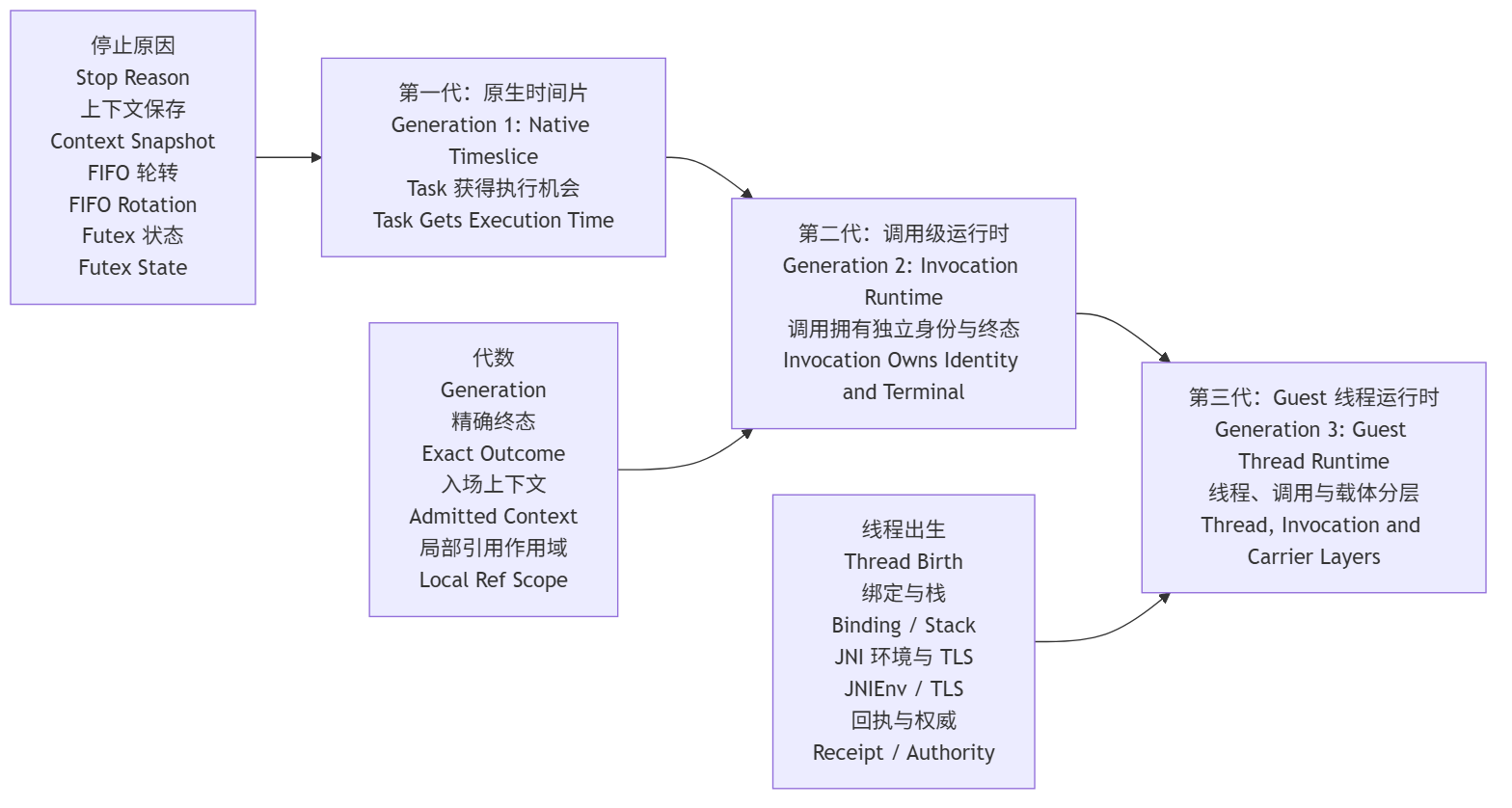 #### 图三:Guest Thread Runtime 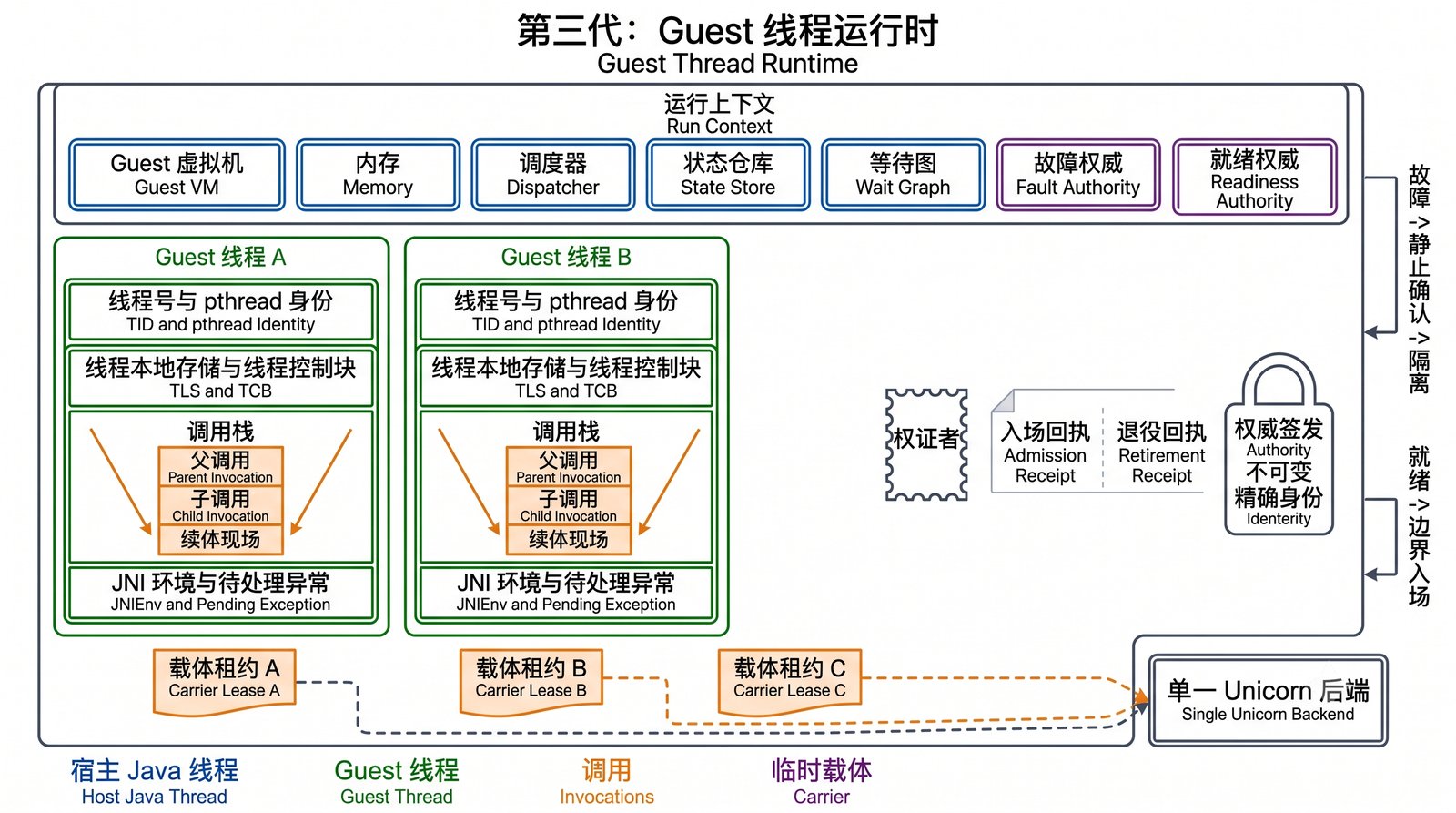 #### 图四:单桥通行的架构比喻 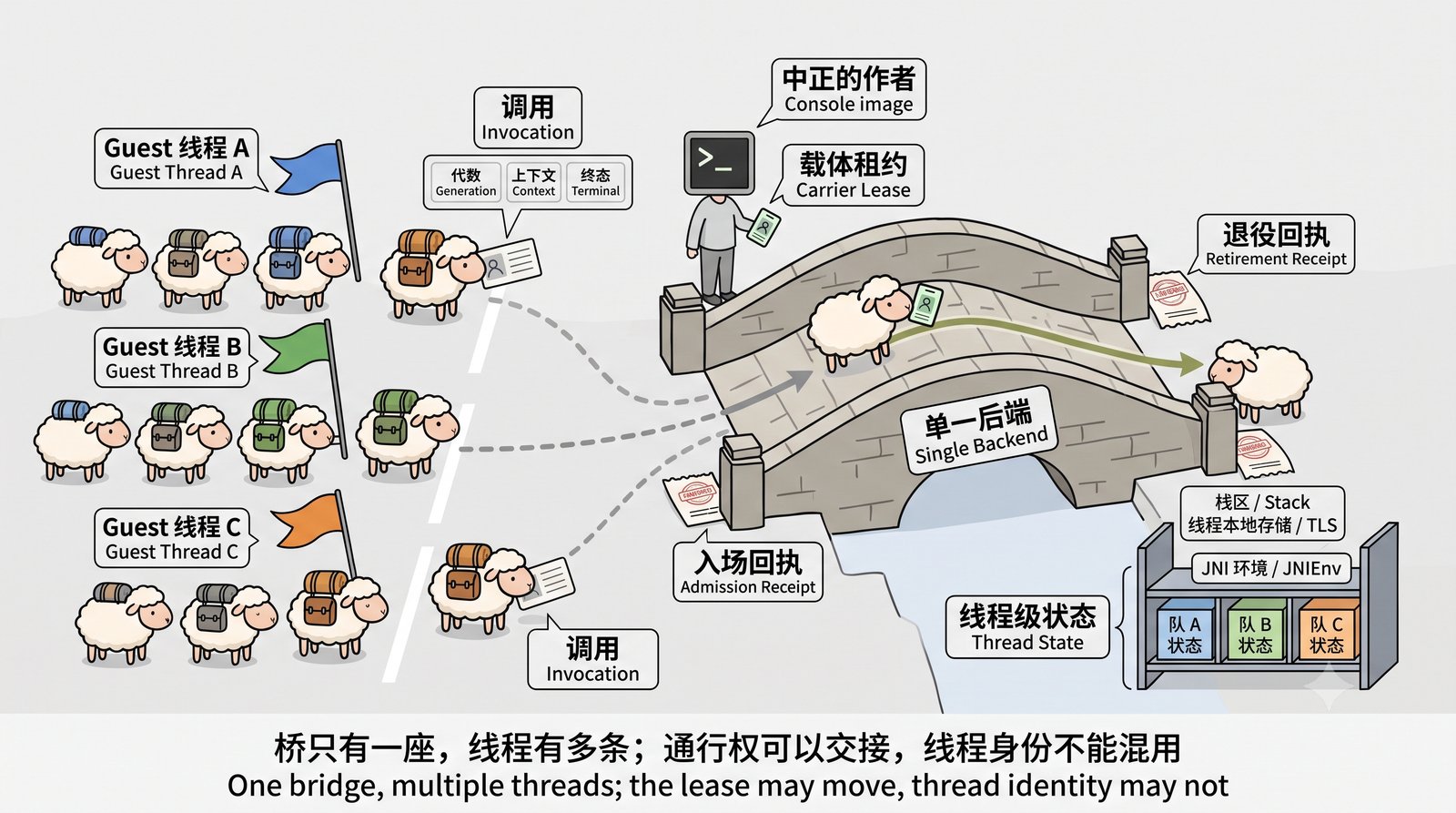 --- --- ## 二、四层身份模型:Run、GuestThread、Invocation、Carrier 组合场景第一次失败时,表面现象并不是“线程模型不对”,而是一些更零碎的问题:某个重复节点恢复后读到了旧异常,异步回调结束后 parent local frame 消失,宿主重试又继承了上一轮尚未退休的 worker。 这些现象最终指向同一个问题:调用、线程、执行载体和整次模拟的生命周期被放进了同一组可变字段。新的设计因此先不讨论调度策略,而是先回答“状态到底属于谁”。 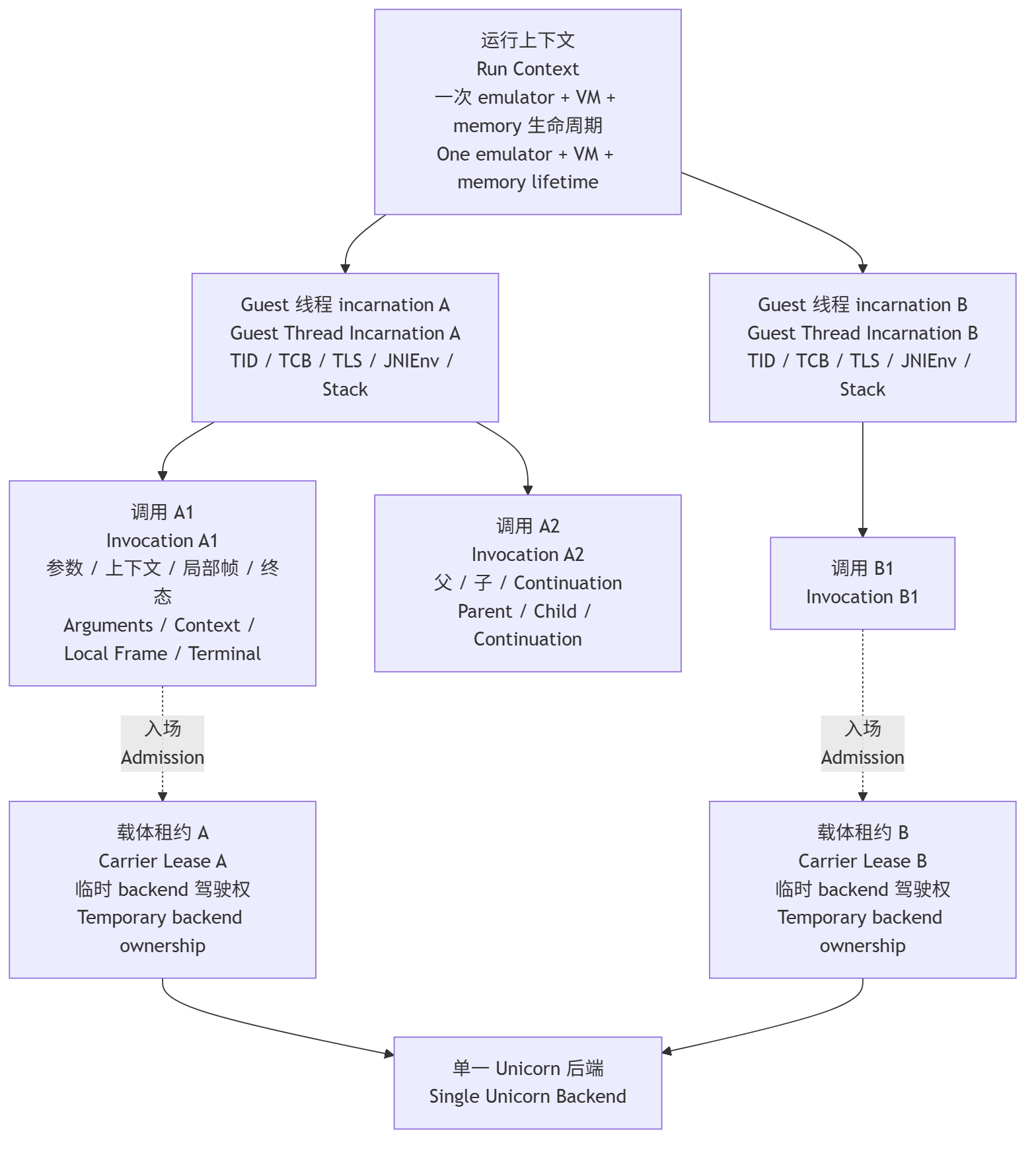 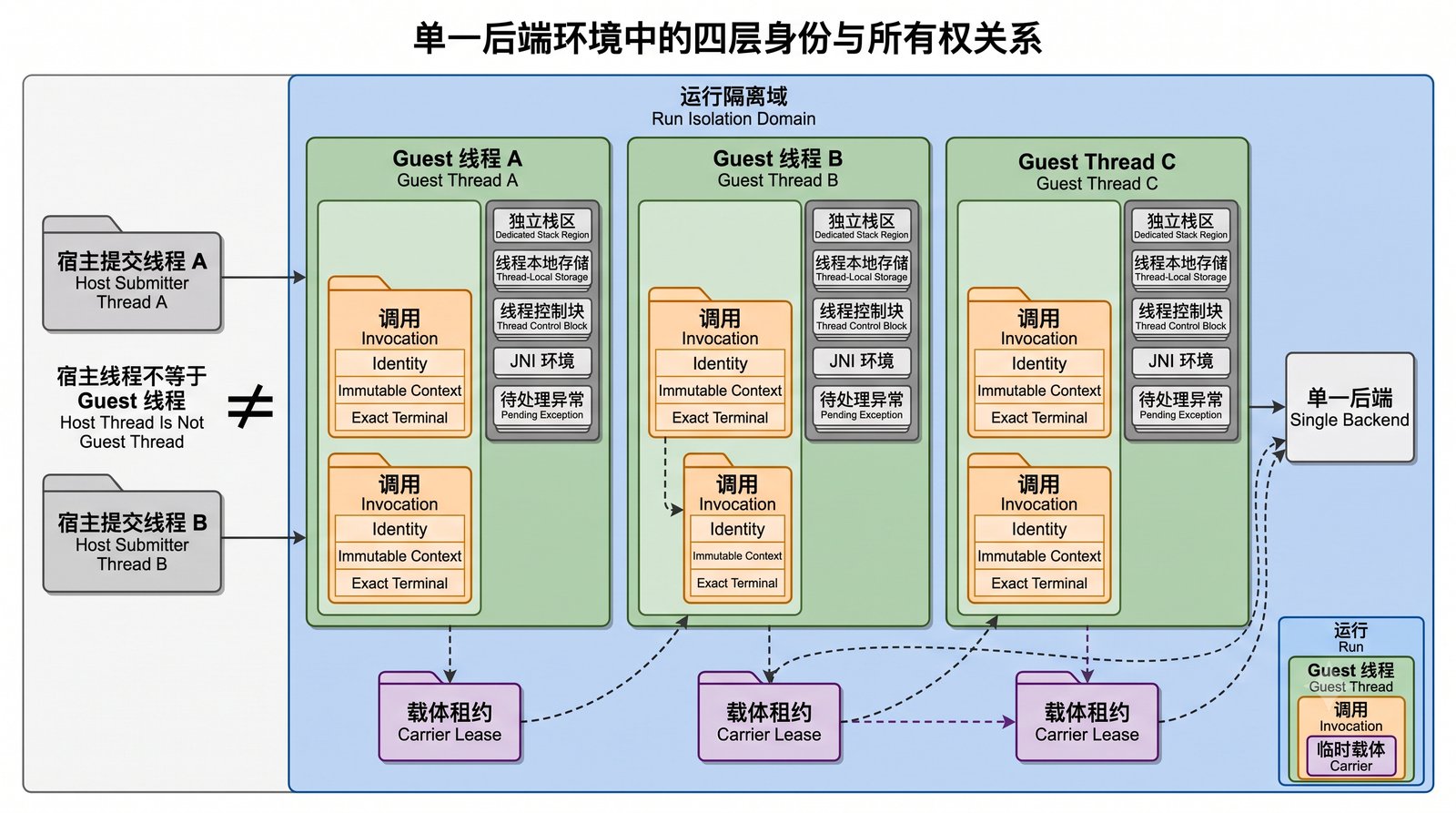 ### 2.1 Run:故障和共享状态的最外层边界 `RunContext` 表示一次完整模拟,而不是某条命令的一次执行。它拥有 emulator、VM、Memory、dispatcher、guest process shared state、thread registry、StateStore、wait graph、clock policy 和各类 authority。 Run 也是最小故障隔离域。如果发生无法确认的 stack corruption、错误 binding、dependency cycle,或者取消后无法证明 guest 已经静止,正确做法不是清几个 Map 后继续运行,而是让当前 Run 进入 quarantine,随后创建全新的 emulator/VM/memory。 推荐状态机如下: ```text NEW -> ACTIVE -> QUIESCING -> DISPOSED \-> QUARANTINED -> DISPOSED ``` ### 2.2 GuestThread:持久线程身份和线程级状态的 owner guest thread 的主键不能只是整数 TID。TID 在线程退出后可以复用,所以真正的身份应当是: ```text ThreadIncarnationId = RunId + monotonically increasing ThreadSerial ``` 每个 incarnation 至少拥有: - numeric guest TID; - thread birth provenance; - pthread self、TPIDR 和 Bionic TCB; - errno、signal 和 futex owner identity; - thread stack region; - JNIEnv attachment 和 pending exception; - thread execution state; - invocation stack; - task binding set; - 从出生到 DEAD 的 lifecycle。 这里最重要的变化,是笔者不再把 role 当成 thread primary key。`MAIN-like`、`worker-like` 之类的名称只能作为观测角色;它们必须通过同一 Run 内的结构证据解析到一个既存 GuestThreadIncarnation,不能反过来创建或猜测线程。 ### 2.3 Invocation:一次调用,而不是一条线程 Invocation 继续保留上一篇建立的能力: ```text command category generation original submitter parent invocation immutable context local reference frames exact terminal exact outcome ``` 但它的边界被进一步收紧。Invocation 不再拥有持久 TID、线程 TLS、JNIEnv attachment 或 thread stack。它可以拥有自己的 entry/return boundary 和 continuation,却不能在结束时把整个 thread execution state 一并销毁。 ### 2.4 Carrier:backend 驾驶权,而不是线程身份 Carrier 表示“谁此刻可以驾驶 Unicorn backend”。它只是一种 capability: ```text CarrierLease = lease identity + invocation identity + thread binding reference + owner session + admitted safe-point sequence ``` 同一 GuestThread 可以在不同时间由不同 carrier 继续执行;一个 synthetic command carrier 也不能因为拥有 TID 和 stack,就冒充 native clone 创建的持久线程。 ### 2.5 状态所有权矩阵 | 状态 | Run | GuestThread | Invocation | Carrier | |---|:---:|:---:|:---:|:---:| | native heap、globals、FD | ✓ | | | | | VM global/weak-global refs | ✓ | | | | | numeric TID、pthread self、TPIDR | | ✓ | | | | errno、signal、thread JNI attachment | | ✓ | | | | persistent stack region | | ✓ | | | | command、generation、parent | | | ✓ | | | local JNI frame、temporary handles | | | ✓ | | | entry/return boundary、continuation token | | | ✓ | | | backend driving permission | | | | ✓ | 这张表比类名更重要。任何实现只要让同一个状态同时出现两个 owner,就应该先停下来重新定义边界,而不是继续增加同步块。 ### 2.6 RunContext:把一次模拟变成组合根 在代码上,`RunContext` 不是一个装 ID 的 DTO,而是整个 runtime 的 composition root。所有会影响线程、调用、fault、state 和 readiness 的 authority 都从这里取得,并且只能服务于同一个 `RunId`。 下面是按实际设计裁剪后的类骨架: ```java public final class RunContext implements AutoCloseable { private final RunId id; private final GuestThreadRegistry threadRegistry; private final RuntimeInvocationRegistry invocationRegistry; private final CarrierAdmissionAuthority admissionAuthority; private final RuntimeCommandStateStore stateStore; private final RunWaitGraph waitGraph; private final RunFaultController faultController; private final HostCallbackAuthority callbackAuthority; private final PreBoundaryReadinessAuthority readinessAuthority; private final AtomicLong mutationEpoch; private volatile RunState state; RunMutationPermit beginMutation(MutationOwner owner); void freezeAdmission(RunFault fault); void quarantine(RunFault fault, OwnerInventory retained); @Override public void close(); // quiesce -> retire -> dispose } ``` 这里有三个实现约束。 第一,其他对象不能自己 new 一个 `RunId` 来伪装成同一 Run。`ThreadIncarnationId`、`InvocationId`、receipt 和 state key 都必须由当前 Run 的 authority 签发。 第二,`close()` 不能等价于 `maps.clear()`。它必须先冻结新 admission,处理 live carrier、waiter、continuation、JNI attachment 和 critical resource;只有确认 guest 不再产生副作用后才能进入 `DISPOSED`。 第三,mutation epoch 不是普通 telemetry counter。任何可能改变 readiness 的状态迁移,都要先取得 `RunMutationPermit`,成功后 commit,失败则 abort。 ### 2.7 GuestThreadIncarnation:数值 TID 之外的线程身份 线程 ID 使用强类型,线程对象只聚合持久 thread scope;birth record 则明确区分 process leader、native clone 和 synthetic carrier: ```java public record ThreadIncarnationId(RunId runId, long serial) {} public sealed interface ThreadBirthRecord { record ProcessLeaderBirth(int pid, long sequence) implements ThreadBirthRecord {} record NativeCloneBirth(ThreadIncarnationId parent, int childTid, long cloneFlags, long tls, long clearChildTid, long sequence) implements ThreadBirthRecord {} record SyntheticCarrierBirth(String purpose, long sequence) implements ThreadBirthRecord {} } public final class GuestThreadIncarnation { private final ThreadIncarnationId id; private final ThreadBirthRecord birth; private final GuestThreadKernelState kernel; // TID / futex / signal private final BionicThreadState bionic; // pthread / TCB / TLS / errno private final JniAttachmentState jni; private final StackRegion stack; private final InvocationStack invocations; private ThreadLifecycleState state; void markDead(CarrierRetirementReceipt receipt) { requireExactRetirement(receipt); requireNoLiveInvocationOrJniLease(); state = ThreadLifecycleState.DEAD; } } ``` 这样做的原因是:process leader 合法地允许 `tid == pid`;native clone 必须保留 parent、TLS 和 child-tid 语义;synthetic carrier 则只能证明“模拟器创建了一个隔离执行载体”,不能证明 guest native runtime 真正创建了线程。 ### 2.8 ThreadIdentityProvider:线程敏感 API 的唯一入口 过去最容易出现的回退,是当前 Task 没有身份时使用 process pid,或者使用宿主 Java thread id。新设计把所有 thread-sensitive API 收敛到一个 provider: ```java public final class ThreadIdentityProvider { private final RunContext run; public ResolvedThreadIdentity current(Task runningTask) { TaskThreadBinding binding = run.threadRegistry() .requireLiveBinding(runningTask); GuestThreadIncarnation thread = run.threadRegistry() .requireIncarnation(binding.threadId()); binding.requireMatches(thread); return ResolvedThreadIdentity.from(thread, binding); } int gettid(Task task) { return current(task).guestTid(); } long pthreadSelf(Task task) { return current(task).pthreadSelf(); } long errnoAddress(Task task) { return current(task).errnoAddress(); } JniEnvHandle jniEnv(Task task) { return current(task).requireAttachedEnv(); } } ``` provider 明确拒绝 host thread id、process pid、`activeCommand`、`lastRunningTask` 和 role name 等 fallback。 如果当前 Task 没有合法 binding,正确结果是 `UNSUPPORTED_FAIL_CLOSED` 或 runtime integrity fault,而不是返回一个“看起来像线程 ID”的值。 --- ### 2.9 RunWaitGraph:把“正在等待”变成可验证的执行关系 线程身份拆开以后,下一件必须被显式建模的事情是等待关系。一个 guest thread 可能等待另一个 invocation 的 terminal,也可能等待 futex、条件变量或 callback mailbox。若这些等待只存在于某个 Task 的字段里,调度器就无法判断一个 fault 应该传播给谁,也无法证明取消后已经没有遗留执行者。 因此,等待关系属于 Run,而不是某个 carrier。`RunWaitGraph` 只保存同一 Run 内的 typed endpoint 和 immutable edge;它不执行 callback,也不直接改变 invocation 状态。状态迁移由 `FaultAuthority` 或 `CancellationAuthority` 提交。 ```java public record WaitNodeId(RunId runId, InvocationId invocationId, long generation) {} public record WaitEdge(WaitNodeId waiter, WaitNodeId dependency, WaitReason reason, long graphEpoch) {} public final class RunWaitGraph { private final RunId runId; private final Map<WaitNodeId, Set<WaitEdge>> outgoing; private final Map<WaitNodeId, Set<WaitEdge>> incoming; private long graphEpoch; GraphMutation prepareBatch(List<WaitEdgeDraft> edges); // 同 Run + 全量环检测 void commit(GraphMutation mutation); // 一次发布全部 edge WaiterSnapshot snapshotDependents(WaitNodeId root); // cleanup 前快照 void removeForTerminal(WaitNodeId node, TerminalReceipt terminal); } ``` `addBatch` 采用“全部验证、一次发布”的方式。一个 waiter 的多个 dependency 不能被后来的 edge 覆盖;如果第三条边形成环,前两条边也不能已经可见。`WaitReason` 至少要区分 invocation terminal、futex、join 和 callback mailbox,因为不同原因对应不同的 quiescence 条件。 等待图的节点不是 command 名称,而是 `(RunId, InvocationId, generation)`。这样同一个 command 的两次重叠调用、同一个 guest thread 的父子 invocation、以及已经被取消但尚未退役的 carrier,都能被准确区分。 ### 2.10 RootFaultController:先冻结,再传播,再收束 根故障处理最忌讳“先清理本地对象,再看看谁在等它”。清理顺序一旦反过来,direct waiter 和 transitive waiter 可能已经失去入口,最后只剩一个看似干净、实际上无法证明静止的 Run。 笔者把故障分成四类: ```text HANDLED_GUEST_SIGNAL guest handler 已消费,可继续运行 UNHANDLED_GUEST_FAULT exact invocation/thread 无法继续 RUNTIME_INTEGRITY_FAULT binding、stack、receipt 或 owner 证据损坏 DEPENDENCY_CYCLE wait graph 无法满足偏序 ``` 其中后三类都是 Run 级风险。`RootFaultController` 负责把一个 root fault 变成不可分叉的 propagation plan: ```java public sealed interface RunFault permits UnhandledGuestFault, RuntimeIntegrityFault, DependencyCycleFault, HostWatchdogExpired {} public record RootFaultPublication( RunId runId, InvocationId rootInvocation, ThreadIncarnationId thread, RunFault fault, long sequence, Object authorityIdentity) {} public final class RootFaultController { RootFaultPublication publishRoot(InvocationContext failed, RunFault fault) { run.freezeNewAdmission(); RootFaultPublication root = faultLedger.publish(failed, fault); WaiterSnapshot snapshot = waitGraph.snapshotDependents(failed.waitNodeId()); cancellation.preparePropagation(root, snapshot); cancellation.commitDependencyFailures(root, snapshot); waitGraph.removeForTerminal(failed.waitNodeId(), failed.faultTerminal()); run.quiescence().awaitRetirementFor(root, snapshot); return root; } } ``` 这里的 `freezeNewAdmission()` 必须早于 root fault 的对外发布,否则新的 invocation 可能在旧 fault 传播期间进入 graph,形成一个没有稳定父节点的孤儿。`snapshotDependents` 必须发生在 edge cleanup 之前;`DEPENDENCY_FAILED` 也必须拥有和 `FAULTED`、`CANCELLED` 对称的 stack、JNI、StateStore、registry release 路径。 ### 2.11 Cancellation、Quiescence 和 Run Disposal 取消请求只能表达“不要再继续安排新的执行”,不能证明 guest 已经停止。新的状态机把请求、收束和终态分开: ```text CREATED -> BOUND -> ADMITTED -> RUNNING <-> SUSPENDED | +-> COMPLETED +-> FAULTED RUNNING/SUSPENDED -> CANCEL_REQUESTED -> QUIESCING -> CANCELLED root fault -> DEPENDENCY_FAILED run disposal -> ABORTED_BY_RUN_DISPOSAL ``` `CANCELLED` 只有在 carrier 已经取得 retirement receipt、continuation 不可恢复、wait edge 已处理、JNI/critical/state staging 已释放、mailbox 不再写入后才能签发。为此需要一个独立的 `QuiescenceBarrier`,而不是让调用者自己传入 `isStopped=true`: ```java public final class QuiescenceBarrier { QuiescenceProbe begin(InvocationId id, CancellationCause cause); CancellationReceipt confirm(QuiescenceProbe probe, List<CarrierRetirementReceipt> receipts); } ``` 所有 probe 都封存 `RunMutationEpoch`;确认期间出现新 admission、continuation 或 mailbox write,旧 probe 立即 stale。若 stack、binding、receipt、依赖图或 cancellation 证据无法确认,最安全的边界是当前 Run,而不是某个 Task: ```java public final class RunQuarantine { void rejectAdmission(); void rejectResume(ContinuationToken token); OwnerInventory retainedPhysicalOwners(); void disposeAfterQuiescence(); } ``` 处置顺序固定为: ```text 拒绝新 admission -> 停止新的 callback 投递 -> 请求所有 live carrier 到达 dispatcher safe point -> 对每个 owner 尝试完整 retirement -> retirement 失败则保留并记录 physical owner -> 关闭 JNI/VM/guest memory -> seal DISPOSED ledger ``` 不能用 `Map.clear()` 代替这条流程。`DISPOSED` 只允许由 disposal authority 签发;无法回收的 physical owner 必须保留在 disposal ledger 中。 时间语义也必须拆开:guest 的 `clock_gettime`、futex timed wait、condvar deadline 和 nanosleep 使用 `GuestClock`;宿主 API 使用 host clock;watchdog 只负责防止测试失控。 ```java public interface GuestClock { long monotonicNanos(); void advanceTo(long guestDeadline); } public interface GuestClockPolicy { void onBackendSlice(GuestExecutionSlice slice); boolean shouldWake(GuestTimer timer, long now); } public final class HostSafetyWatchdog { WatchdogExpiry arm(RunId run, Duration hostBudget); void onExpiry(WatchdogExpiry expiry); // quarantine/cancel, never guest terminal } ``` 两套时间的终态不能混写: | 事件 | 允许发布的结果 | |---|---| | guest timer 到期且 guest 继续执行 | `GUEST_TIMEOUT` 或 timed-wait wake | | invocation 自己完成返回 | `COMPLETED` | | host API 等待超时 | 只返回宿主等待结果,不改变 guest terminal | | host safety watchdog 到期 | `CANCEL_REQUESTED`、`QUIESCING` 或 `QUARANTINED` | host watchdog 不能被转换成 guest natural timeout,也不能因为宿主等待结束就直接签发 `CANCELLED`。是否推进 guest wall clock、其他 thread 获得 backend 服务时是否允许 timer 前进,都必须由同一个 `GuestClockPolicy` 决定,不能让各个 command 自己读取宿主系统时间。 ### 2.12 一次完整运行时 Walkthrough:从提交到 Readiness 前面的章节分别解释了身份、载体、回执和就绪权威,但如果只按概念阅读,仍然容易把它们理解成互相独立的类。下面用一条的组合场景来描述,把这些对象按时间顺序串起来。场景只包含两个 Guest 线程、一次嵌套 callback 和一个最终集成边界,不对应任何具体应用或业务协议。 这条流程的主线是“线程 A 发起 native 调用,callback 在 Guest 线程 B 上重入,A 恢复后由 Readiness Authority 确认最终边界”。图中的对象名是稳定身份示意,不是宿主线程号,也不是调用者可以随意填写的字符串。  这条 walkthrough 使用的对象身份如下: ```text RunContext run-demo GuestThreadIncarnation thread-A#1, thread-B#1 InvocationRecord invocation-A#7, invocation-B#3 TaskThreadBinding binding-A#12, binding-B#08 CarrierLease lease-A#41, lease-B#42 AdmissionReceipt admission-A#41, admission-B#42 CallbackInstanceId callback-B#3 CarrierRetirementReceipt retirement-A#41, retirement-B#42 ReadinessReceipt readiness#9 BoundaryAdmissionPermit permit#9 ``` `thread-A#1` 和 `thread-B#1` 是持久的 GuestThread incarnation;`invocation-A#7` 和 `invocation-B#3` 是发生在这些线程上的调用;`lease-A#41` 和 `lease-B#42` 只是短时间获得单一 backend 驾驶权的载体。它们的生命周期不同,不能用一个对象代替另外两个对象。 #### Step 0:Run 先注册 expected slots 组合场景开始时,`RunContext(run-demo)` 创建 emulator、VM、Memory、Dispatcher、ThreadRegistry、StateStore、WaitGraph 和两类 Authority。配置只声明 expected slots,不伪造未来的 receipt: ```text native slot -> requires AdmissionReceipt + CarrierRetirementReceipt callback slot -> requires CallbackAdmissionReceipt host-state slot -> requires typed committed state evidence boundary slot -> requires one ReadinessReceipt and one consumed permit ``` 此时没有任何调用已经完成,`ReadinessAuthority` 只能返回“证据不足”。它不会因为 slot 数量正确,或者某个 Map 非空,就提前打开最终边界。 #### Step 1:Guest Thread A 提交一次 native invocation 宿主提交线程只提交参数和场景节点,不能声明“我就是 Guest Thread A”。`Dispatcher` 根据当前 Run 中已经出生的 `thread-A#1` 解析 `TaskThreadBinding`,然后创建调用记录: ```text HostSubmitter -> InvocationRecord(invocation-A#7, run-demo, node=native-A) -> bind(thread-A#1, binding-A#12) -> allocate CarrierLease(lease-A#41) -> issue AdmissionReceipt(admission-A#41) ``` `AdmissionReceipt` 同时绑定 Run、GuestThread incarnation、Invocation、binding epoch 和 carrier lease。它不是“排队成功”的普通布尔值,后续任何阶段都必须拿同一份 identity 回查。若 binding 已经退役或 Run 已进入 quarantine,入场在这里直接 fail closed。 #### Step 2:Carrier A 驾驶 backend,时间片停止只是交接 `lease-A#41` 获得当前 backend ownership,`TaskThreadBinding` 装载 `thread-A#1` 的独立 StackRegion、TLS、JNIEnv attachment、pending exception 和 continuation。backend 开始执行 `invocation-A#7`: ```text CarrierLease lease-A#41 -> load binding-A#12 -> restore thread-A#1 stack / TLS / JNIEnv -> run invocation-A#7 on Single Backend -> stop(reason=SAFE_POINT or TIMESLICE) ``` 这里的 stop 只产生 continuation snapshot 和 handoff evidence,不产生 `COMPLETED`。`invocation-A#7` 仍然是 RUNNING 或 SUSPENDED,`lease-A#41` 也仍然是 live,直到 dispatcher 明确完成 retirement。 #### Step 3:A 进入 callback 边界,B 获得独立 callback identity 在 A 的 native 执行过程中,guest 触发一个异步 callback。callback adapter 不读取“最近一次 command”,而是根据当前 dispatcher snapshot 创建独立的 `CallbackInstanceId(callback-B#3)`。A 的 parent invocation 保留自己的 local frame 和 continuation;B 作为 callback consumer 使用自己的 GuestThread incarnation: ```text invocation-A#7 -> parent callback boundary -> CallbackInstanceId(callback-B#3) -> InvocationRecord(invocation-B#3, parent=invocation-A#7) -> bind(thread-B#1, binding-B#08) -> allocate CarrierLease(lease-B#42) -> issue AdmissionReceipt(admission-B#42) ``` 这里的“B”不是宿主 Java thread 的名字,也不是从 A 的 carrier 复制出来的临时标签。B 必须拥有自己的 thread birth、StackRegion、TLS、JNIEnv 和 invocation stack。A 的 local frame 不能由 B 关闭,B 的 pending exception 也不能写入 A 的 thread scope。 #### Step 4:Carrier B 提交 callback state 并完成 retirement `lease-B#42` 进入唯一 backend 后,dispatcher 恢复 `thread-B#1` 的现场,执行 callback consumer,并在同一事务中提交三份证据: ```text callback-B#3 -> callback admission is consumed -> typed callback state is committed to StateStore -> CallbackAdmissionReceipt is sealed -> CarrierRetirementReceipt(retirement-B#42) is issued -> lease-B#42 becomes retired ``` 只有 `StateStore` 提交和 callback receipt sealing 都成功,callback slot 才算闭合。若 callback producer 缺失、instance identity 不匹配、state commit 失败或 physical release 失败,B 不得伪造成功结果;它会保留未完成的 owner,或者让当前 Run 进入 quarantine。 #### Step 5:A 使用原 continuation 恢复,而不是重新猜线程 callback 返回后,dispatcher 根据 `invocation-A#7` 保存的 continuation 和 `binding-A#12` 重新申请 A 的后续阶段,恢复 `thread-A#1` 的 stack、TLS 和 JNIEnv。它不会按宿主线程、command category 或“当前最后一个 carrier”重新查找线程: ```text retirement-B#42 -> restore continuation owned by invocation-A#7 -> verify thread-A#1 + binding-A#12 + current epoch -> reacquire backend lease for A -> resume native execution -> terminal(invocation-A#7) -> issue retirement-A#41 ``` 如果此时 `binding-A#12` 已过期、Run epoch 已变化,或者 A 的 carrier 已被另一个 incarnation 占用,恢复必须拒绝。不能因为参数和调用类型相同,就把 B 的现场或新一代 binding 当成 A 的现场。 #### Step 6:ReadinessAuthority 汇合 exact evidence A 和 B 都有 terminal 并不等于最终边界可以进入。`ReadinessAuthority` 在一个 mutation epoch 内读取各个 owner 的 committed ledger,并核对 expected set: ```text native-A -> admission-A#41 + retirement-A#41 + terminal(invocation-A#7) callback-B -> admission-B#42 + callback-B#3 + retirement-B#42 host-state -> typed committed state for callback-B#3 runtime -> no live waiter, continuation, lease or root fault ``` 只有 exact Run、node、invocation、thread incarnation、binding epoch 和 authority epoch 全部一致,且没有 live waiter、未退休 carrier 或待提交 state,authority 才签发: ```text ReadinessAuthority -> ReadinessReceipt(readiness#9) -> claim exact reservation -> BoundaryAdmissionPermit(permit#9) ``` `permit#9` 只能被一个最终 admission 消费。消费时,dispatcher、readiness ledger 和 carrier reservation 共同发布同一个 commit marker;任一 participant 失败,permit 失效,prepared owner 回滚,无法证明回滚时则 quarantine Run。 #### Step 7:最终边界只消费 permit,不重新推理前置状态 最终集成边界拿到的不是一组 `ready=true`,而是一份绑定 exact evidence digest 的 `BoundaryAdmissionPermit`。它只做一次性消费: ```text permit#9 -> validate run-demo / authority epoch / closure digest -> consume once -> publish final admission receipt -> enter integration boundary ``` 如果另一个线程试图重复消费 `permit#9`,或者在签发后改变了 graph、state、callback 或 carrier reservation,消费会失败。系统宁可停在边界之前,也不会用“最新结果”“相同 command”或“数量已经够了”补出一条未经证明的因果链。 这条 walkthrough 可以压缩成一句话:**A 的调用可以暂停,B 的 callback 可以插入,backend 的驾驶权可以交接,但每次交接都必须沿着 exact thread incarnation、invocation、binding、lease 和 receipt 传递;最终 readiness 只消费已经闭合的证据,不重新猜测历史。** --- ## 三、为什么每个 Carrier 都必须有独立的 Stack、Binding 和 Lease 在重叠场景中,一条 invocation 会暂停等待 callback,另一条 invocation 随后接管 backend。如果二者只保存寄存器 context,却复用同一栈顶或一张可变 binding,后进入者就可能覆盖前者的 return boundary;恢复时 PC 看似正确,SP、TLS 或 owner epoch 已经不属于它。 因此,把四层身份拆开之后,真正进入 backend 的 carrier 仍需要一组完整证据。笔者最终把一次合法执行入口收紧为: ```text physical stack evidence + exact TaskThreadBinding + exact InvocationRecord + exact CarrierLease + current GuestThreadIncarnation ``` 缺少任何一项,都不能仅凭 command、role、host thread 或最近一次 running task 补齐。 ### 3.1 独立 stack 解决的是物理隔离,不直接创造线程身份 单 backend 只有一组 CPU 寄存器。切换 Task 时,如果两个活跃 carrier 使用重叠 stack range,后一个 carrier 的 entry frame、保存寄存器或 nested callback frame,就可能覆盖前一个尚未完成的返回边界。 因此,每个可并发存活的 carrier 必须提供可验证的物理 stack evidence: ```text stack lower bound stack upper bound entry SP guard / canary allocation identity backend mapping identity ``` 验证规则至少包括: - 两个 live carrier 的 stack range 不重叠; - entry SP 位于自己的 range 内; - guard/canary 未被破坏; - suspended frame 存在时禁止把 SP 重置到 stack top; - faulted stack 禁止再次用于 fresh invocation; - physical allocation 不能由固定地址或 generation 算式伪造。 这里要区分物理存储和逻辑所有权。P1500 `Task` 可以继续保存 backend context、waiter 和 stack allocation;Guest Thread Runtime 则通过 binding 把这些物理对象解释为某个 thread incarnation 的执行状态。一次性 synthetic carrier 可以拥有自己的独立栈,但它仍然只能被标记为 synthetic birth,不能自动升级成 native thread。 ### 3.2 TaskThreadBinding 解决“这份现场属于哪个线程” `TaskThreadBinding` 是 Task 与 GuestThreadIncarnation 之间的不可猜测连接。它至少记录: ```text task identity task generation thread incarnation id birth source binding epoch bind / unbind sequence runtime validity ``` 为什么需要 binding epoch?因为同一个 Task 对象、数值 TID 或 carrier role 都可能被重新使用。一个 continuation 如果只保存 `task == oldTask`,在 rebind 后仍可能错误恢复旧现场;加入 epoch 后,旧 snapshot 会自然变成 stale。 ### 3.3 CarrierLease 解决“谁现在有权驾驶 backend” Binding 证明身份,Lease 证明权限,两者不能合并。 一个 GuestThread 可以已经存在并具有合法 binding,但此刻没有取得 backend;另一个 invocation 也可以已经创建 record,却仍在 FIFO 中等待。只有 carrier 获得 live lease,并且 admission 已提交,它的 context 才能对 guest runtime 可见。 换句话说: ```text Thread exists != may execute now Invocation bound != admitted now Task runnable != owns backend now ``` ### 3.4 Continuation 必须严格 LIFO 真实 JNI/Java callback 经常形成同线程同步重入: ```text native parent -> Java callback -> native child -> child return -> parent resume ``` 如果 child 被当作普通 FIFO item 排在 parent 后面,parent 又同步等待 child,系统会形成天然死锁。同线程同步重入必须在同一个 GuestThreadIncarnation 上压入 child invocation,并保存 parent 的 callback return boundary。 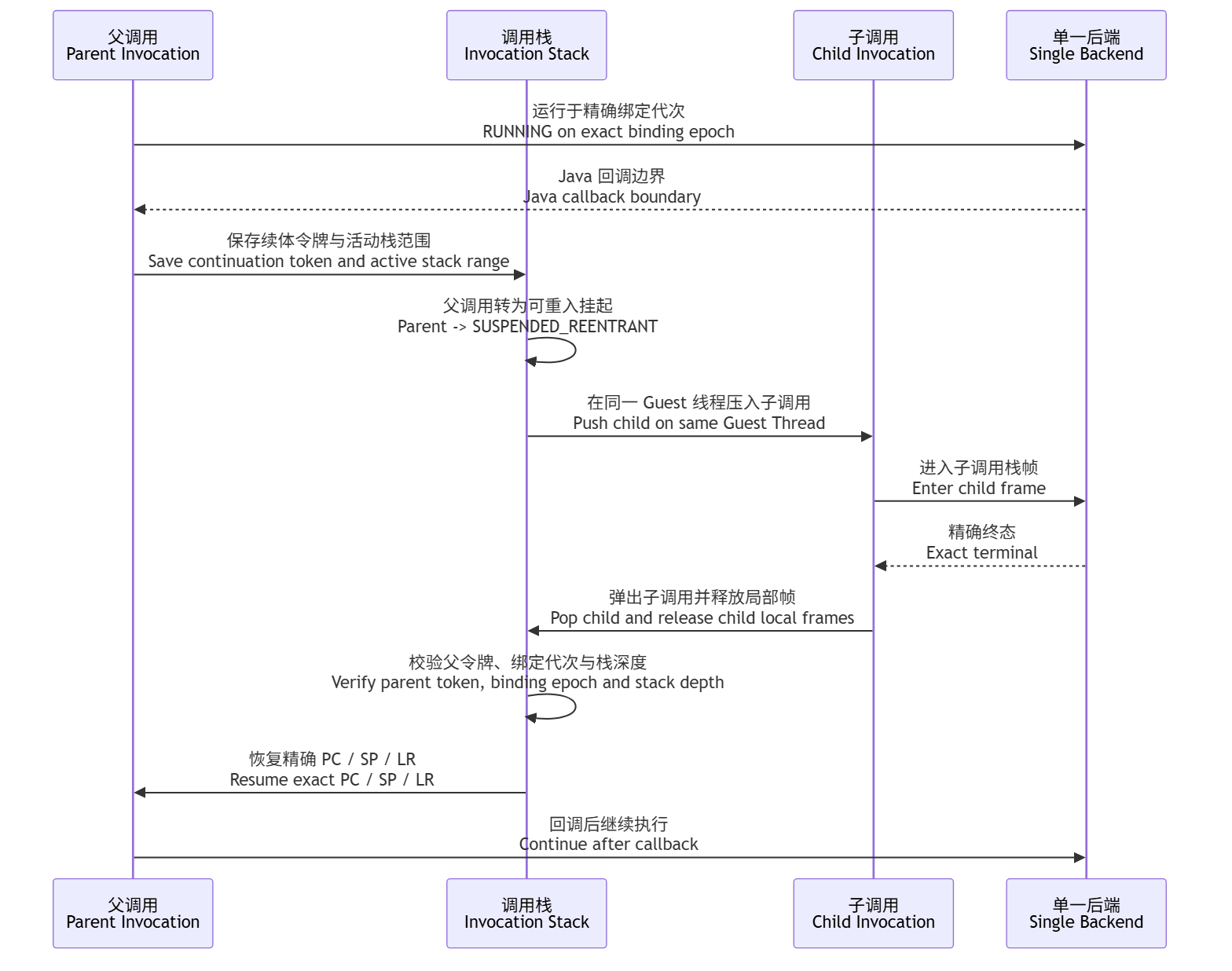 非 LIFO resume、跨线程复用 child local frame、binding epoch 不匹配或 child stack 覆盖 parent live range,都应被视为 runtime integrity fault,而不是再尝试一次恢复。 ### 3.5 StackRegion 与 TaskStackEvidence 的类设计 `StackRegion` 表示 thread scope 的逻辑栈区域,`TaskStackEvidence` 表示某次 carrier 从 backend allocation 得到的物理证据。两者不应混成一个类。 ```java public record StackRegion(long lower, long upper, long guardAddress, long expectedCanary) { void requireContains(long sp); void requireDisjoint(StackRegion other); } public record TaskStackEvidence( Object backendAllocationIdentity, StackRegion region, long entrySp, long canaryReadBack, long allocationSequence) { static TaskStackEvidence fromBackendAllocation( BackendStackAllocation allocation, long entrySp); } ``` 关键点是 `fromBackendAllocation()` 只能接受 backend 真实 allocation handle,并且 canary 要从 backend memory 读回。测试中随手传入两段不重叠的数字,只能证明区间算法,不能证明真实 stack 已隔离。 ### 3.6 TaskThreadBinding:身份引用而不是 owner ```java public record TaskThreadBinding( Task task, ThreadIncarnationId threadId, ThreadBirthRecord birth, BindingKind kind, long taskGeneration, long bindingEpoch) { void requireCurrent(Task task, ThreadIncarnationId thread, long epoch); void unbind(CarrierRetirementReceipt receipt); } ``` `TaskThreadBinding` 不释放 stack、不关闭 JNIEnv,也不把 thread 标成 DEAD。它只是一个带 epoch 的非 owning 连接,资源生命周期仍由 GuestThread、dispatcher retirement 和 Run disposal 各自负责。 ### 3.7 InvocationContinuation 与 InvocationStack ```java public record InvocationContinuation( InvocationId invocationId, ThreadIncarnationId threadId, long bindingEpoch, BackendContextToken contextToken, long savedPc, long savedSp, long savedLr, int stackDepth, SuspensionReason reason) {} public final class InvocationStack { private final Deque<InvocationRecord> frames = new ArrayDeque<>(); void pushSynchronousChild( InvocationRecord parent, InvocationRecord child, InvocationContinuation parentContinuation); InvocationRecord completeChild( InvocationRecord child, InvocationTerminal terminal); } ``` 异步 mailbox item 不走这条 LIFO 路径。同线程同步重入、同线程异步提交和跨线程同步调用必须使用不同 `ReentryMode`,否则 FIFO 和调用栈会再次混成一个概念。 --- ## 四、从可变状态改成 Receipt-backed Transaction 一个典型的组合失败是:dispatcher 已经收下 carrier,场景节点却在随后绑定 state 或 callback evidence 时失败。如果这个 carrier 此时已经可运行,系统面对的就不再是一次普通 rollback,而是一个可能执行过 guest 指令、却没有完整业务身份的半发布对象。 上一篇已经引入了 admission,但继续实现后,笔者发现“某个对象现在看起来是 live”与“它曾经合法完成某个状态迁移”是两种完全不同的证据。 例如,carrier 退役后,live binding 本来就应该消失。如果 terminal consumer 仍要求读取 live binding,就会出现一个悖论:正确 cleanup 反而让历史终态无法验证。 解决办法是把入场和退场都改成不可变 receipt。 ### 4.1 AdmissionReceipt 证明 carrier 是怎样合法入场的 一个完整的 `AdmissionReceipt` 至少封存: ```text RunId ThreadIncarnationId carrier identity TaskThreadBinding epoch InvocationId / record identity / generation CarrierLeaseId admission sequence ``` 这些字段必须来自同一个 authority transaction。调用者不能分别传入 thread id、record 和 binding,再依靠字段相等做表面校验;否则多个真实对象只要拥有相同数值,就可能伪造出“看起来一致”的 admission。 ### 4.2 Dispatcher accept 不能立刻等价于 RUNNABLE 如果 carrier 一进入 dispatcher queue 就可运行,那么 graph、role evidence、state producer 或 readiness participant 随后失败时,系统只能尝试撤回一个可能已经执行过 guest 指令的 Task。此时再删除 binding、lease 或 stack,反而可能释放正在运行的 owner。 因此,新的 dispatcher entry 增加了一个关键状态: ```text PREPARED_NOT_RUNNABLE ``` 它表示 dispatcher 已接受 exact carrier,但 picker 还不能执行它。所有参与者先完成 validate 和 stage,最后由单一 commit marker 共同公开。 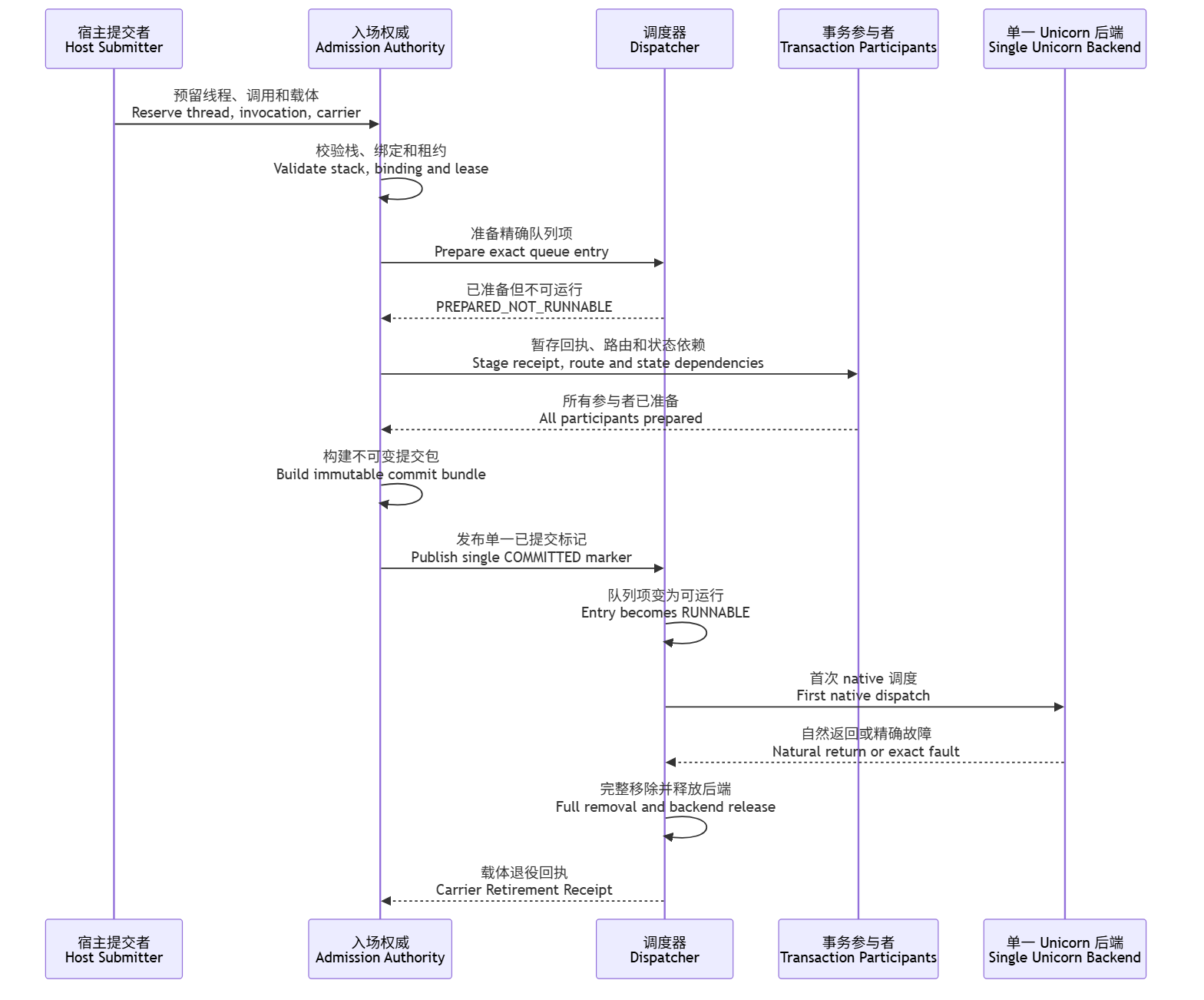 这个顺序建立了两个非常强的边界: ```text commit marker 之前:zero native entry commit marker 之后:no new fallible publication step ``` ### 4.3 CarrierRetirementReceipt 证明资源已经可以释放 退役 receipt 不能由 `Task.destroy()` 或 Java listener 自行签发。只有 dispatcher 看到以下事实同时成立,才有资格产生它: - running slot 已清除; - task list 和外部队列已移除; - waiter 已解除; - backend ownership 已释放; - carrier 已不可再次 dispatch; - exact admission identity 仍匹配。 最终 route ledger 保存的是双 receipt: ```text AdmissionReceipt + CarrierRetirementReceipt + exact Invocation terminal ``` 因此,即使 Task、binding 和 lease 已经从 live registry 正确删除,后续 graph、StateStore 和 outcome consumer 仍能验证历史事实。 ### 4.4 Receipt 是证据,Authority 才拥有状态机 receipt 必须是 immutable value。它不应该提供 `markConsumed()`、`setValid(false)` 之类的可变方法,也不应该自己决定是否还能被使用。 真正的消费状态保存在 authority 私有 ledger 中: ```text receipt identity -> issued -> claimed by exact reservation -> consumed by exact final admission -> stale / retired ``` 这样,调用者拿到 receipt 只能提交给 authority 验证,不能自行把一张旧票改成“尚未使用”。 ### 4.5 Failure atomicity 的最终含义 很多代码会把“失败后抛异常”称为 fail closed,但真正的 failure atomicity 要求更高: ```text 成功:所有 owner 看见同一个 committed identity 失败:所有 owner 都不可见 回滚失败:保留物理 owner,并 quarantine 整个 Run ``` 不能出现 queue 已删除、stack 已释放,但某个 registry 仍认为 lease live;也不能出现 StateStore 已 commit,而 graph 仍停在 submitted。跨 owner 的事务要么有一个共同 commit marker,要么每一步都有 exact rollback,并且 rollback 失败不会继续复用当前 Run。 ### 4.6 Reservation、Receipt 与 CommitBundle 的类型设计 入场对象按“可回滚 reservation”和“不可变历史 receipt”分成两组: ```java public record CarrierAdmissionReservation( RunId runId, ThreadIncarnationId threadId, InvocationId invocationId, Task carrier, CommandInvocationRecord record, TaskThreadBinding binding, TaskStackEvidence stackEvidence, CarrierLeaseId leaseId, long reservationSequence) {} public record AdmissionReceipt( CarrierAdmissionReservation reservation, long admissionSequence, Object authorityIdentity) {} public record CarrierRetirementReceipt( AdmissionReceipt admission, CarrierRemovalEvidence removal, long dispatcherSequence, Object dispatcherIdentity) {} public record FinalAdmissionCommitBundle( AdmissionReceipt admission, PreparedRouteOpen routeOpen, PreparedRoleLineageOpen roleOpen, PreparedReadinessConsume readinessConsume, long commitSequence, Object markerIdentity) {} ``` `authorityIdentity` 和 `dispatcherIdentity` 防止“字段完全相同的自建对象”冒充签发证据;普通 caller 没有 mint 权限。 并非每次 admission 都需要 role 或 readiness participant,所以后几项可以是显式 `Optional`;但 required participant 不得因缺失而静默跳过。 ### 4.7 CarrierAdmissionAuthority 的核心接口 ```java public interface CarrierAdmissionAuthority { CarrierAdmissionReservation reserveBeforeSubmit( ResolvedThreadBinding thread, CarrierSubmissionSpec submission); FinalAdmissionTransaction prepareDispatcherAdmission( CarrierAdmissionReservation reservation, DispatcherPreparedAdmission prepared); AdmissionReceipt commitFinalAdmission( FinalAdmissionTransaction transaction); void rejectBeforeCommit( CarrierAdmissionReservation reservation, AdmissionFailure failure); } ``` authority 内部的 reservation 顺序大致如下: ```java reserve: active Run -> allocate carrier and read backend stack evidence -> bind carrier to exact thread incarnation and epoch -> create invocation record and register lease -> publish one rollback-capable reservation ``` 这里每一步都可能失败,因此实现需要维护明确 rollback order:lease、record、binding、stack/carrier allocation 按相反顺序撤销。不能先把 reservation 从 pending map 删除,再调用可能抛异常的 participant。 ### 4.8 FinalAdmissionTransaction 的提交状态机 ```java public final class FinalAdmissionTransaction implements AutoCloseable { enum State { PENDING, DISPATCHER_PREPARED, FINAL_STAGED, COMMITTED, RUNNING, ROLLED_BACK, QUARANTINED } void stage(PreparedParticipant participant); FinalAdmissionCommitBundle commit(); @Override public void close(); // pre-marker rollback, failure -> quarantine } ``` `commit()` 中最值得强调的不是 `synchronized`,而是最后一个可失败步骤的位置。所有 participant 必须在 marker 前完成 validation;marker 发布后,dispatcher 只把已匹配 bundle 的 entry 变成 RUNNABLE,不再调用新的业务 participant。 ### 4.9 Dispatcher 只为完整 removal 签发 RetirementReceipt ```java retire exact admission -> request backend stop and reach safe point -> remove running slot / waiter / queue entry -> prove backend released and carrier no longer dispatchable -> issue CarrierRetirementReceipt -> unbind, release lease, seal terminal ledger ``` 如果 removal 或 receipt issuance 失败,physical owner 必须进入 quarantined-retirement owner,而不是已经从所有索引消失。否则系统既无法继续运行,也无法在 disposal 时找到需要释放的对象。 ### 4.10 RouteLedgerEntry:让终态在 cleanup 后仍可验证 ```java public record RouteLedgerEntry( InvocationSpec spec, CommandInvocationRecord record, AdmissionReceipt admission, CarrierRetirementReceipt retirement, InvocationTerminal terminal) { void requireSealedExactIdentity(); } ``` graph terminal、StateStore commit 和 exact outcome 都消费同一个 sealed ledger entry。这样不会出现 caller 看到一份 outcome、graph 保存另一份 terminal、cleanup 又产生第三份 retirement identity。 ### 4.11 同步互斥合同:保护发布顺序,不替代身份证明 Receipt-backed transaction 解决了“谁签发、谁消费、谁可以回滚”,但还没有回答另一个问题:多个宿主线程同时读写这些 owner 时,怎样保证它们看不到半发布状态,也不会因为锁顺序错误而互相等待。 笔者在合同测试中先遇到的并不是数据错,而是锁升级死锁。一个 callback adapter 持有 readiness read permit 时继续调用需要 write lock 的 `bindExpectedReceipt`;另一个 role-lane lifecycle 又在 lineage monitor 内等待 readiness 写门。单看每个方法都合理,组合起来却形成了: ```text read permit -> bind expected receipt -> readiness write lock -> wait for another owner holding lineage monitor lineage monitor -> wait for readiness write lock ``` 这类问题不能靠增加超时或把所有方法改成 `synchronized` 解决。真正需要固定的是:谁可以暂时拥有 backend,谁可以发布状态,谁必须先释放自己的锁,以及失败时哪个 authority 负责回滚。 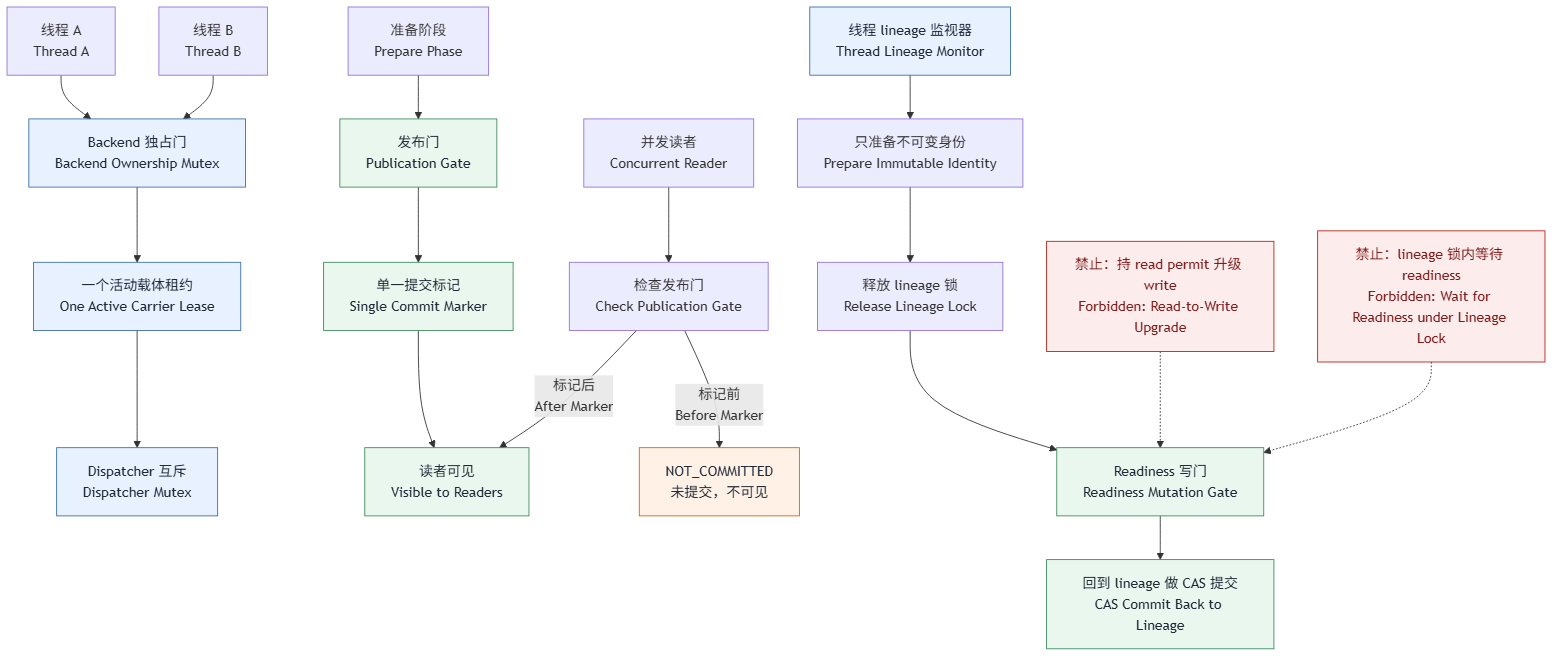 这张图表达的不是一套全局大锁,而是四个相互配合的互斥边界: 1. `Backend Ownership Mutex` 保证同一时刻只有一个 `CarrierLease` 驾驶单一 backend。它保护的是执行权,不拥有 GuestThread 的 Stack、TLS 或 JNIEnv。 2. `Publication Gate` 把 graph/config、bootstrap、lane 和 readiness participant 的物理准备与对外可见分开。marker 之前,所有 reader 只能得到 `NOT_COMMITTED`;marker 之后,不能再追加新的可失败 participant。 3. `Readiness Mutation Gate` 保护 expected set、actual receipt set、mutation epoch 和 permit 状态,但不允许调用者在持有 read permit 时自行升级到 write path。 4. `Thread Lineage Monitor` 只负责准备精确的 thread、incarnation 和 binding identity。它必须先释放,再进入 readiness bind,最后用 CAS 把结果写回 lineage;CAS 失败要 exact unbind,unbind 失败则 quarantine Run。 这四个边界对应了近期合同测试中反复验证的几类不变量: | 同步互斥合同 | 要保护的对象 | 必须拒绝的情况 | |---|---|---| | backend 独占 | active carrier、running slot、backend ownership | 两个 carrier 同时进入、已退役 carrier 再次 dispatch | | 发布门可见性 | graph/config、role policy、bootstrap、required lane | marker 前读到半状态、close/quarantine 竞态中继续看到旧 owner | | readiness 锁序 | expected/actual receipt set、mutation epoch、permit ledger | read-to-write 升级、stale snapshot 覆盖新 mutation | | lineage 与 readiness 交接 | ThreadIncarnation、Binding epoch、exact receipt | 持 lineage 锁等待 readiness、wrong epoch 回写 | | permit 单次消费 | reservation object identity、claim/consume 状态 | forged reservation、同一 permit 二次 claim、旧 permit 重新签发 | | callback 事务互斥 | dispatcher snapshot、graph milestone、StateStore、callback scope | foreign dispatcher、伪造 token、三段提交中途暴露半状态 | | JNI retirement 清理 | JNIEnv、pending exception、local frame、critical lease | 一个 carrier 清理另一个 carrier 的线程级状态 | 合同测试的正向路径只能证明“合法锁序可以完成”。因此每一条合同还必须有对应的负向、清理和并发路径: ```text positive -> 合法 owner 按固定顺序完成 prepare / commit / retire identity -> wrong Run / thread / binding / epoch 立即拒绝 concurrency -> 双线程交错时只能看到 marker 前或 marker 后的完整状态 failure -> 任一 participant 失败,其他 owner 不得继续暴露半状态 cleanup -> retirement / close / quarantine 后锁、lease、JNI 和 ledger 一致收束 repeat -> stale receipt 或旧 permit 不能在下一轮 Run 中复活 ``` 近期测试已经覆盖了发布门竞态、精确 permit claim、callback snapshot authority、callback graph rollback、双 carrier JNI 隔离和真实 Unicorn dispatcher 的合法 suspend/resume 顺序;但这类结果仍应按 targeted contract 解释。合法顺序的正控通过,不等于负向顺序、完整 production lifecycle 和 clean-artifact 一并闭合。 因此,本文中的“同步互斥合同”不是“所有状态都加锁”,而是三条更窄的设计规则:**身份由 Binding、Lease 和 Receipt 证明;互斥只保护证据发布和消费;锁顺序必须让失败可以回滚、让 reader 看不到半状态。** ### 4.12 Run lifecycle invalidation 也必须线性化 Admission 和 readiness 的提交可以做到原子,但如果 `Run.close()` 或 `Run.quarantine()` 仍然分步关闭各个 authority,系统依旧可能留下反向窗口。 假设实现先清空 receipt,再发布 Run 的终止状态,那么并发线程可能在两步之间仍看到 `ACTIVE`,取得新的 mutation permit,并在 Run 已经终止后提交。反过来,如果先发布终止状态,再清空旧 receipt,reader 又可能看到“Run 已不可用,但旧证据仍然有效”的组合。 因此,Run lifecycle 需要一个独立的线性化边界: ```text ACTIVE(epoch = E) -> begin lifecycle invalidation -> close new admission and mutation begin -> invalidate authority receipts and snapshots -> reject every permit minted under epoch E -> publish QUIESCING or QUARANTINED ``` 关键不是这几步在源码中的先后顺序,而是 `begin`、`commit` 和 `snapshot` 都必须核对同一个 lifecycle marker 与 epoch。只在 `beginMutation()` 时检查一次 `RunState` 不够,因为 permit 取得以后,Run 仍可能在另一个宿主线程上进入失效流程。 一个最小接口可以表达为: ```java public final class RunLifecycleGate { LifecyclePermit beginMutation(RunId runId); LifecycleInvalidation beginInvalidation(RunId runId); void requireCommitAllowed(LifecyclePermit permit); RuntimeSnapshot snapshotIfVisible(RunId runId); } ``` `LifecyclePermit` 必须携带签发时的 epoch;`requireCommitAllowed()` 在最终发布前重新核对 epoch 和 marker;`snapshotIfVisible()` 也通过同一 gate 读取。这样,失效开始以后,旧 permit、旧 receipt 和旧 snapshot 会同时失去授权,而不是由每个 registry 各自猜测 Run 是否仍然可用。 这个 gate 也不能演变成全局大锁。Run 只负责发布 lifecycle marker;各个 authority 在锁外执行自己的 exact cleanup,再把不可变结果交回 gate 确认。这样既关闭 TOCTOU,也避免 Run 锁反向调用 StateStore、thread registry 或 callback authority 形成新的锁环。 --- ## 五、JNI 必须同时按 Thread 和 Invocation 隔离 某场景中有一条同步重入:native parent 进入 Java callback,callback 又调用 native child。第二版已经能为 child 创建独立 invocation,但如果所有 JNI 状态仍跟着 invocation 走,child 返回时可能清掉 parent 的 pending exception;如果所有状态都跟着 thread 走,child local refs 又会泄漏给 parent。 Invocation-scoped local references 是上一篇的重要改动,但完整 JNI 语义不只有 local object map。继续扩展后,笔者把 JNI 状态拆成四级作用域。 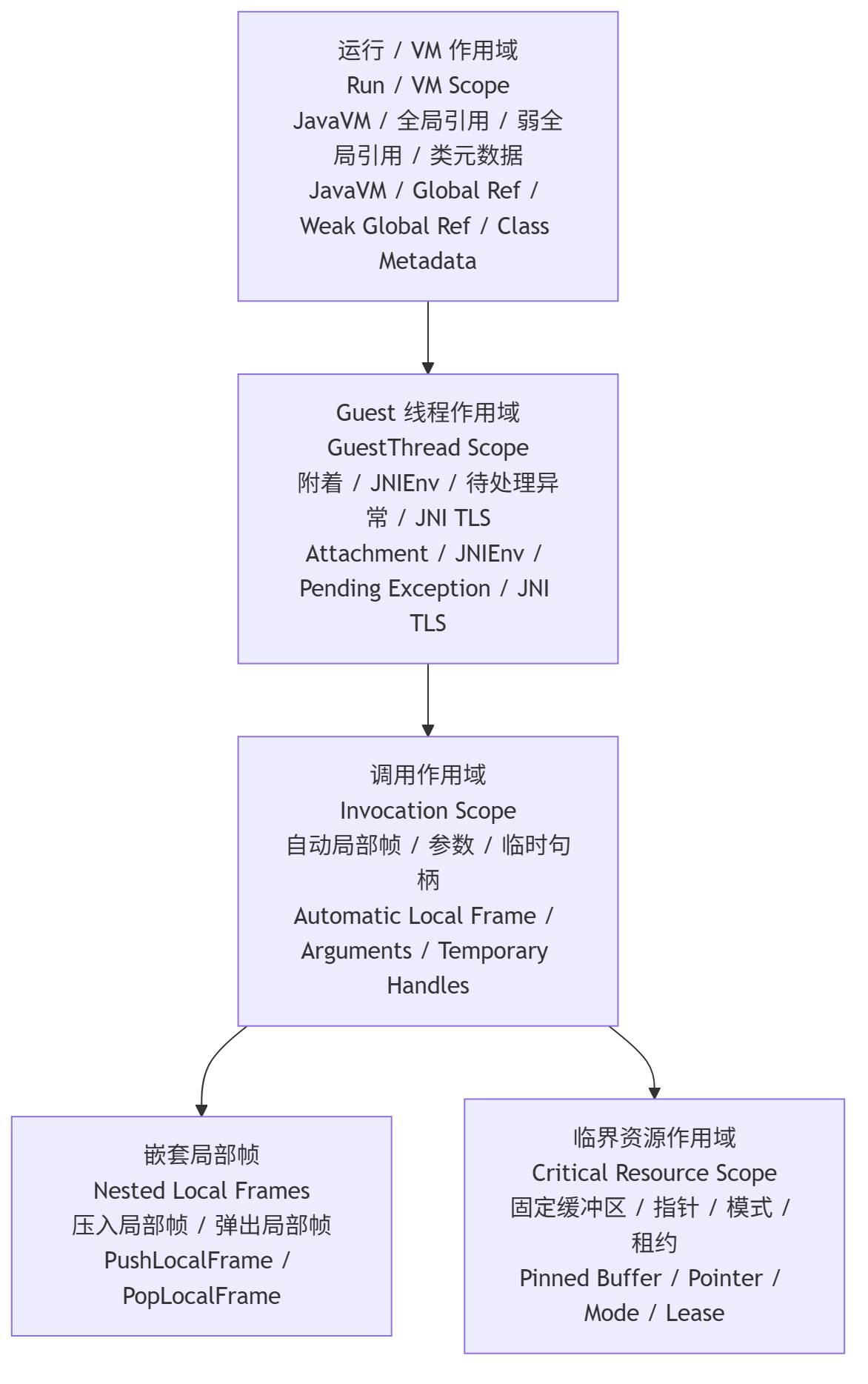 ### 5.1 JNIEnv 和 pending exception 属于 GuestThread 同一个 guest thread 在 fresh entry、timeslice、wait/resume 和 nested invocation 中,应看到稳定的 JNIEnv identity。不同 guest thread 的 attachment 和 pending exception 必须隔离。 因此不能用 host `Thread.currentThread()` 推导 JNIEnv,也不能在某个 invocation 的 finally 中清空整个 VM 的 pending-exception map。 `DetachCurrentThread` 也必须改变 exact GuestThread 的 attachment state。detach 后 `GetEnv` 应返回 detached,直到显式 attach;如果 `getJNIEnv()` 每次都静默创建一个新 wrapper,detach 只是表面行为。 ### 5.2 LocalFrame 属于 Invocation 每次 native invocation 至少拥有一个自动 local frame。`PushLocalFrame` 在当前 invocation 内继续压栈;同线程 child invocation 则拥有独立 child frame stack。 `PopLocalFrame(result)` 不能只弹一个模型 token。它必须操作真实 DVM reference table: - 删除 top frame 的真实 refs; - 将合法 result 提升到 parent frame; - parent 已有 local 继续有效; - global/weak-global 按 JNI 规则转换; - null 保持 null; - unknown、stale 或 cross-invocation handle fail closed。 ### 5.3 Critical resource 是独立的两阶段事务 pinned array/string 同时涉及逻辑 lease 和物理 guest buffer。正确 acquire 顺序是: ```text allocate physical buffer -> register exact pointer lease -> return pointer ``` 如果 lease 注册失败,必须释放刚分配的 buffer。release 则相反: ```text validate owner / pointer / mode without removal -> release or flush physical buffer -> commit lease removal ``` 物理释放失败时,lease 必须保持 live;`JNI_COMMIT` 只 flush,不结束 lease。只改逻辑 Map、不验证实际 buffer 的测试,无法证明 JNI production path 已经正确。 ### 5.4 Reference scope 为什么需要双条件关闭 一次 invocation 的 local refs 只有在两个条件同时满足后才能释放: ```text carrier has retired AND host has resolved and acknowledged the outcome ``` 只有 carrier retired,host 可能还没通过返回 handle 解析对象;只有 outcome acknowledged,TIMEOUT 或 cancellation 下 guest carrier 可能仍未真正静止。双条件关闭把 guest 使用期和 host 解析期都纳入同一生命周期。 ### 5.5 JniAttachmentState:稳定 JNIEnv 与真实 detach ```java public final class JniAttachmentState { private final ThreadIncarnationId owner; private AttachmentState state = AttachmentState.DETACHED; private JniEnvHandle env; private DvmObject<?> pendingException; synchronized JniEnvHandle attach(JniEnvAllocator allocator); synchronized int getEnv(JniEnvOut out); // 查询不隐式 attach synchronized void detach(); // 无 live invocation/critical lease synchronized void setPendingException(DvmObject<?> throwable); synchronized void clearPendingException(); } ``` `getEnv()` 不应隐式调用 `attach()`。查询和状态改变必须是两个 API,否则 guest 调用 `DetachCurrentThread` 后,下一次普通查询会悄悄把线程重新 attach。 ### 5.6 InvocationLocalReferenceScope:真实 frame stack ```java public final class InvocationLocalReferenceScope { private final InvocationId invocationId; private final Deque<LocalFrame> frames = new ArrayDeque<>(); private boolean carrierRetired; private boolean outcomeAcknowledged; int addLocal(DvmObject<?> object); void pushLocalFrame(int capacity); int popLocalFrame(int resultHandle, ReferenceResolver resolver); void markCarrierRetired(); void acknowledgeOutcome(); void releaseWhenBothConditionsHold(); } ``` 真实 VM 的 `addLocalObject()` 和 `getObject()` 必须根据当前 running carrier 找到这个 scope,而不是维护一个只用于测试的平行 frame model。 ### 5.7 Pending exception 的路由 `Throw`、`ExceptionOccurred` 和 `ExceptionClear` 都先从当前 running carrier 解析 exact `RuntimeJniScope`,再访问其中的 `GuestThreadIncarnation.jni()`。这里没有 `Map<Task, Throwable>` 的 fallback;Invocation 只能在当前 thread scope 中读取和清理 pending exception。 ### 5.8 CriticalLeaseRegistry:逻辑与物理资源保持同一终态 ```java acquire critical: allocate physical buffer -> register exact invocation/thread/pointer lease -> return pointer; registration failure frees buffer release critical: validate owner/pointer/mode without removal -> flush or free physical buffer -> commit logical lease removal -> JNI_COMMIT keeps buffer and lease live ``` 如果 physical free 抛异常,lease 仍留在 registry 中,Run disposal 能看到这份未释放资源并 quarantine。相反,先删 lease 再 free 会在失败后永久丢失 physical owner。 --- ## 六、网络层给出的教训:时间相邻不等于 Producer 关系 Guest Thread Runtime 不只解决线程切换,也必须解决跨调用状态到底从哪里产生。 笔者在梳理一条通用网络初始化链时,曾遇到两个看起来高度相关的数据:前一个 native command 返回一段连接 metadata,随后同一宿主执行链又把一段较短的二进制输入交给安全回调。它们出现在线程相邻、时间相邻的位置,因此最初很容易画出这样的边: ```text connection metadata -> unknown transform -> callback binary input ``` 如果把这条边直接写进模拟器,下一步通常就是尝试截断、hash、decode、AES 或固定 fallback。但这些方法都在回答“怎样造出一个形状相似的值”,没有回答“谁才是真实 producer”。 进一步检查对象 identity、调用边界、内容摘要和真实 consumer 后,笔者发现两者属于两个独立数据域: ```text native metadata producer -> connection state network callback producer -> callback argument -> data consumer ``` 它们共享网络会话上下文,却不存在可证明的直接派生关系。 这个例子带来了三个架构结论。 ### 6.1 Command record 不能冒充 callback record callback 可能发生在两个 native command 之间,也可能来自一个长期存在的网络 session。它不应借用前一个 completed command 的 record,更不能借用未来 consumer invocation 的 record。 因此需要独立对象: ```text HostCallbackRecord CallbackAdmissionReceipt HostCallbackStateKey HostCallbackDispatchScope ``` ### 6.2 Callback type 不是 Callback instance 同一种 callback boundary 在一次 Run 中可以出现多次,也可以属于不同 connection/session。只用一个 enum 或 `lastCallback` 槽位,会让后来的 callback 覆盖前一实例。 更合理的 identity 是: ```text RunId + typed callback boundary + opaque connection/session identity + authority-issued monotonic sequence ``` consumer 必须携带并消费与当前 session、parent invocation 和 binding 对应的 exact receipt,不能查询“最近一次同类型 callback”。 ### 6.3 Adapter 只观察真实 callback,不制造 callback 如果模拟环境并不执行完整 Java framework body,可以在精确的入站 DVM method dispatch 上安装 adapter。它只做三件事: 1. 从真实 receiver 和参数读取 session 与 callback input; 2. 从 dispatcher sealed snapshot 读取当前 carrier、binding 和 parent invocation; 3. 让 callback authority 原子提交 record、state 和 receipt。 adapter 不主动调用 callback,不生成固定输入,也不替代原始 decrypt/consumer 逻辑。真实 callback 没有发生时,依赖它的节点应继续 fail closed。 ### 6.4 DispatcherCurrentCallbackSnapshot:当前执行者必须由 dispatcher 封存 callback authority 不能接受这样的接口: ```java CurrentTaskAccess access = () -> someTask; ``` 普通 caller 返回一个 live Task,并不能证明这个 Task 此刻真的是 dispatcher current。正确做法是在 dispatcher 持有 running ownership 的边界签发 sealed snapshot: ```java public final class DispatcherCurrentCallbackSnapshot { private final RunId runId; private final long runGeneration; private final Task carrier; private final AdmissionReceipt admission; private final InvocationId parentInvocationId; private final long bindingEpoch; private final long dispatcherSequence; private final Object dispatcherIdentity; DispatcherCurrentCallbackSnapshot( RunId runId, long runGeneration, Task carrier, AdmissionReceipt admission, InvocationId parentInvocationId, long bindingEpoch, long dispatcherSequence, Object dispatcherIdentity) { // package-private: only dispatcher integration can mint it this.runId = runId; this.runGeneration = runGeneration; this.carrier = carrier; this.admission = admission; this.parentInvocationId = parentInvocationId; this.bindingEpoch = bindingEpoch; this.dispatcherSequence = dispatcherSequence; this.dispatcherIdentity = dispatcherIdentity; } } ``` authority 消费 snapshot 时还要回查当前 live state:carrier 未退役、binding epoch 未变化、parent invocation 仍处于允许 callback 的状态、dispatcher sequence 仍对应当前 owner session。 ### 6.5 Callback identity 与 state key ```java public record CallbackInstanceId( RunId runId, CallbackBoundaryId boundary, OpaqueSessionId session, long sequence) {} public record HostCallbackStateKey( CallbackInstanceId callback, String valueType) {} ``` ```java public final class HostCallbackRecord { private final CallbackInstanceId id; private final ThreadIncarnationId threadId; private final InvocationId parentInvocationId; private final long bindingEpoch; private final Object argumentIdentity; private final byte[] defensiveCopy; private CallbackState state = CallbackState.OBSERVED; void markStateCommitted(HostCallbackStateKey key) { requireState(CallbackState.OBSERVED); this.state = CallbackState.STATE_COMMITTED; } } ``` callback 参数需要 defensive copy,object identity 则用于防止同一 mutable array 在 commit 后被 caller 改写。是否允许相同对象重复通知,应由 callback boundary policy 明确决定,而不是依赖 `byte[].equals()`。 ### 6.6 HostCallbackAuthority 的原子提交 ```java public CallbackAdmissionReceipt observeAndCommit( CallbackBoundaryId boundary, OpaqueSessionHandle sessionHandle, DispatcherCurrentCallbackSnapshot snapshot, Object actualArgument) { CurrentRuntimeOwner owner = dispatcherVerifier.verify(snapshot); CallbackArgument argument = argumentValidator.requireTypedActual( boundary, actualArgument); CallbackInstanceId instance = callbackSequences.next( run.id(), boundary, sessions.resolve(sessionHandle)); HostCallbackRecord record = records.prepare( instance, owner.threadId(), owner.parentInvocationId(), owner.bindingEpoch(), argument); HostCallbackStateKey stateKey = stateStore.stageHostCallback(record); try (RunMutationPermit mutation = run.beginMutation("host_callback")) { stateStore.commitHostCallback(record, stateKey); CallbackAdmissionReceipt receipt = receipts.publish( record, stateKey, owner.admission()); mutation.commit(); return receipt; } catch (RuntimeException failure) { stateStore.discardHostCallback(record, stateKey); records.rollback(record); throw failure; } } ``` 如果 graph 也需要镜像 callback milestone,它应作为同一 transaction 的 participant,或者由 coordinator 同时 prepare StateStore、receipt registry、expected slot 和 graph publication。不能先 commit callback state,再把 graph 失败仅仅解释为“最后反正不 ready”。 ### 6.7 HostCallbackDispatchScope:只在嵌套 callback 内可见 ```java try (HostCallbackDispatchScope scope = callbackScopes.open(receipt)) { return invokeOriginalCallbackConsumer(receiver, args); } ``` 后续 native consumer 只能从当前 live scope 读取 exact receipt: ```java CallbackAdmissionReceipt receipt = callbackScopes .requireCurrent() .requireBoundary(expectedBoundary) .requireSession(expectedSession) .requireParent(currentInvocation.id()) .receipt(); ``` scope 在 callback 返回后关闭,receipt 仍可作为历史 evidence 保存在 ledger 中,但不能通过一个全局 `lastCallbackAdmission` 重新注入其他 invocation。 这里真正可复用的方法不是某个网络协议的实现,而是一条因果纪律: > 同线程只能证明调度邻接,同时间只能证明事件邻接;只有 exact object identity、producer boundary 和 consumer receipt 才能证明数据依赖。 --- ## 七、Readiness 不是普通的 `if (ready)` 在组合场景中,最让人困惑的现象是:每条前置调用都有 terminal,最终集成边界却仍然不能安全进入。反过来,如果只看几个 `ready` boolean,它又可能在 callback 尚未提交、carrier 尚未退役时过早放行。 当一组线程、native invocation、host state 和网络 callback 共同组成一个稳定前缀时,系统需要在某个 integration boundary 前判断“前置条件是否已经完整”。 最简单的实现是依次查询: ```java if (graphReady && stateReady && callbackReady && noLiveTask) { enterNextStage(); } ``` 这段代码在并发环境中并不可靠。检查完 graph 后,另一个线程可以创建新 invocation;检查完 callback 后,root fault 可以让整个 Run 失效;检查完 lease map 为空后,一个 prepared admission 又可能进入队列。 Readiness 不是几个 boolean 的 AND,而是跨多个 owner 的一致性证明。 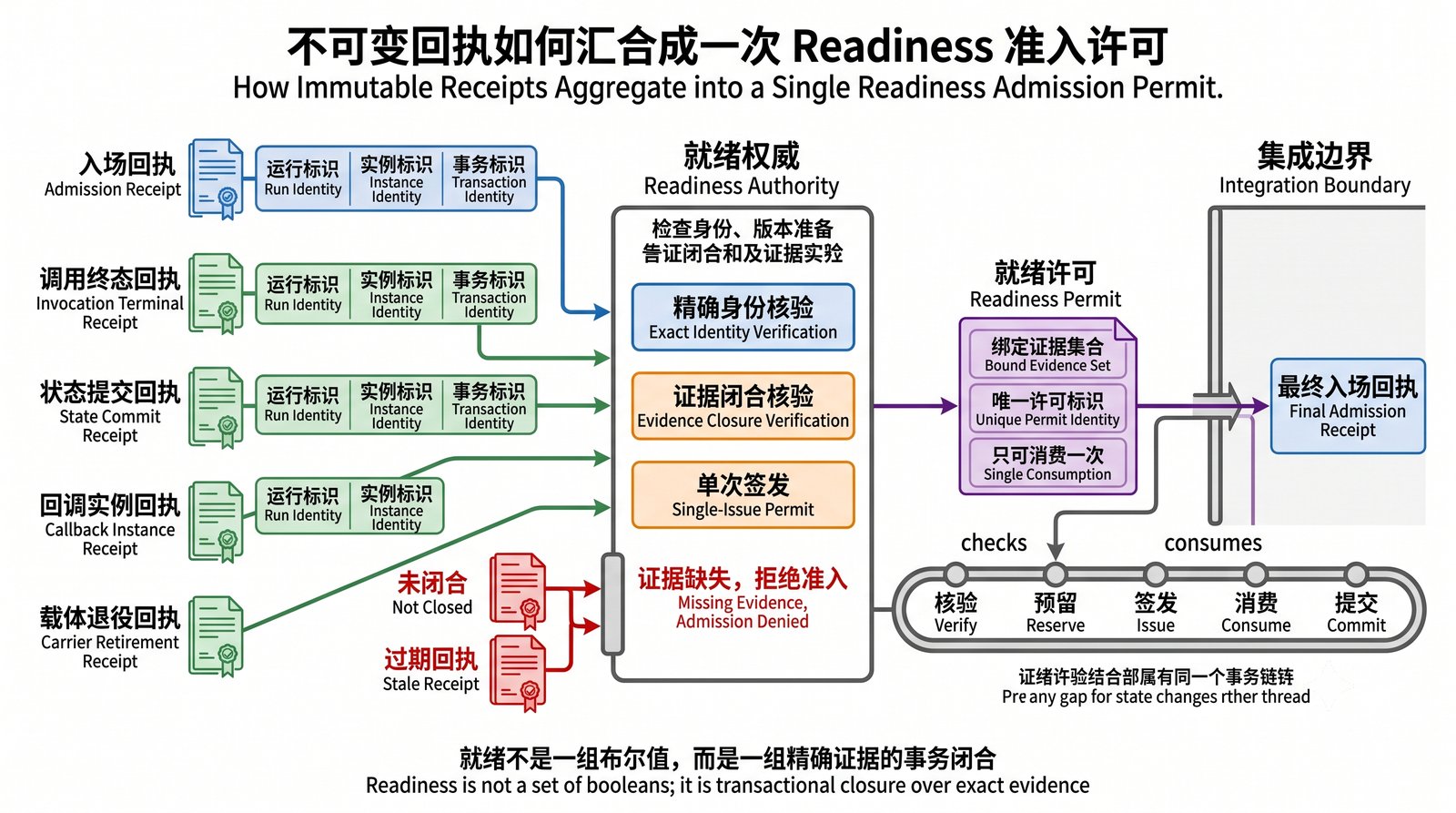 ### 7.1 ScenarioConfig 只声明 expected slots 配置期可以知道的是: - 哪些 typed node 是 required; - 哪些 node 是 optional; - 每类 node 的 cardinality; - 节点之间的 partial-order 关系; - 哪些 role、callback 和 state receipt 必须出现。 配置期不知道未来的 admission sequence、callback sequence 或 receipt object identity。因此 `ScenarioConfig` 只能预注册 immutable expected slots,不能提前伪造运行时证据。 运行时每个合法 producer 在自己的 commit transaction 中,把 exact receipt 绑定到对应 slot: ```text Native slot <- AdmissionReceipt + RetirementReceipt Callback slot <- CallbackAdmissionReceipt Role slot <- RoleBindingReceipt Host slot <- typed committed state evidence ``` ### 7.2 Authority 核验 Expected Set 与 Actual Set 签发 readiness 前,authority 需要比较: ```text BoundExpectedReceiptSet == ActualReceiptSet from terminal/state/callback/role ledgers ``` 比较的是 typed identity 集合,不是 count、非空 Map 或 caller 提供的 digest。missing、extra、duplicate、wrong generation、cross-Run 或 stale binding 任一出现,都不能签发 receipt。 ### 7.3 Mutation epoch 关闭 TOCTOU 窗口 所有会影响 readiness 的 mutation,都必须通过同一个 Run-owned gate: ```text carrier admission / retirement invocation state transition wait edge fault callback commit graph milestone state commit role lineage change ``` 每次成功 mutation 推进单调 epoch。readiness receipt 封存签发时的 epoch;签发后发生任何相关 mutation,旧 receipt 自动 stale,并允许在新状态稳定后重新 issue。 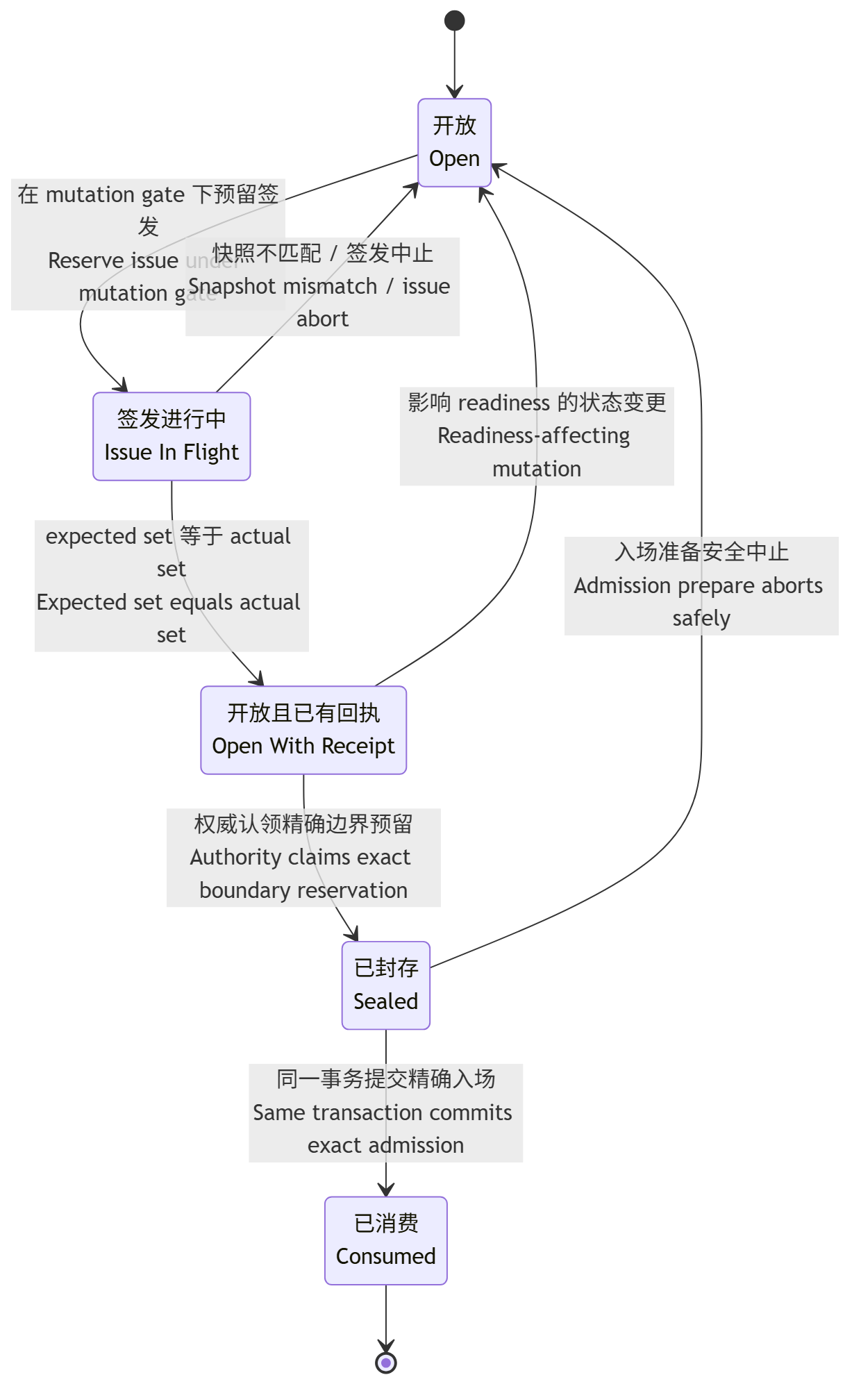 ### 7.4 Readiness receipt 与 boundary admission 必须同一事务消费 即使 receipt 在签发时有效,也不能先 `receipt.consume()`,再单独创建下一阶段 carrier。两步之间仍然可能失败,留下“readiness 已消费,但目标 invocation 没有入场”的半状态。 正确做法是: ```text verify immutable readiness receipt -> claim exact carrier reservation -> seal new readiness mutation -> prepare dispatcher admission -> publish the same final commit marker -> mark receipt consumed in authority ledger ``` 因此,integration boundary 只是当前 ScenarioConfig 的一个 typed admission node,不是 runtime 内硬编码的某个 command。换一个场景,boundary 可以改变;Run、GuestThread、JNI、fault 和 receipt 合同不需要随之改变。 ### 7.5 ScenarioConfig 与 ExpectedNodeSlotPlan 的类设计 ```java public record ScenarioNodeId(String value) {} public record ScenarioConfigId(String value) {} public final class ExpectedNodeSlotPlan { enum SlotKind { NATIVE, HOST_STATE, CALLBACK, ROLE_LINEAGE } public record Slot( ScenarioNodeId node, SlotKind kind, int cardinality, boolean required) {} private final Map<ScenarioNodeId, Slot> slots; void requireCanBind(ScenarioNodeId node, SlotKind kind, int existingCount); } public final class ScenarioConfig { private final ScenarioConfigId id; private final ExpectedNodeSlotPlan expectedSlots; private final Set<ScenarioEdge> partialOrder; private final Set<ScenarioNodeId> optionalNodes; void validateStaticClosure(); } ``` `ScenarioNodeId` 必须从 spec 一路贯穿 record、reservation、admission、route ledger 和 terminal evidence。自由文本 context、command category 或 admission sequence 都不能临时升格为 node identity。 ### 7.6 BoundExpectedReceiptSet:绑定的是 exact identity ```java public final class BoundExpectedReceiptSet { private final ScenarioConfigId configId; private final Map<ScenarioNodeId, List<BoundReceipt>> receipts; void bindNative(ScenarioNodeId node, AdmissionReceipt admission, CarrierRetirementReceipt retirement); void bindCallback(ScenarioNodeId node, CallbackAdmissionReceipt callback); BoundExpectedSnapshot snapshot(long mutationEpoch); } ``` 这里使用 `Map<Node, List<Receipt>>`,而不是 `Map<Node, Receipt>`,因为某个 slot 的合法 cardinality 可能大于一。更不能使用 `Map<Command, Receipt>`,同一 command category 可以对应多个不同 scenario node。 ### 7.7 ReadinessReceipt 与 AdmissionPermit ```java public record ReadinessReceipt( RunId runId, long authorityEpoch, long runtimeMutationEpoch, long graphGeneration, long issueSequence, ScenarioConfigId scenarioConfigId, ReceiptClosureDigest closureDigest) {} public record BoundaryAdmissionPermit( RunId runId, long authorityEpoch, long readinessIssueSequence, long runtimeMutationEpoch, Object permitIdentity) {} ``` permit 在 authority 内部还要维护 claim 状态: ```text UNCLAIMED -> CLAIMED(exact reservation identity) -> CONSUMED(exact final admission identity) ``` 第一次 claim 后,同一 permit 不能再为第二个 carrier prepare admission;即使第二个 reservation 的字段恰好相同,只要对象或 authority identity 不同,也必须拒绝。 ### 7.8 PreBoundaryReadinessAuthority 的签发算法 ```java public ReadinessReceipt issueIfReady() { mutationGate.writeLock().lock(); try { requirePhase(ReadinessPhase.OPEN); long epoch = run.runtimeMutationEpoch(); EvidenceSnapshot evidence = evidenceSource.snapshotAll(epoch); matcher.requireExactClosure(config, boundExpected.snapshot(epoch), evidence); requireNoFaultLeaseWaiterOrContinuation(evidence); requireEpochUnchanged(epoch); return receipts.issue(run.id(), authorityEpoch, epoch, evidence.digest()); } finally { mutationGate.writeLock().unlock(); } } ``` 这个算法不能只扫描 live admission map,因为合法 readiness 时 live admission 本来就应为空。前序已完成的 native 节点必须从 terminal/retirement ledger 读取历史双 receipt;callback、host state 和 role lineage 也从各自的 committed ledger 提供 actual evidence。 ### 7.9 MutationPermit 的 validate-before-commit ```java public final class RunMutationPermit implements AutoCloseable { private boolean committed; public void commit() { requireOwnerStatePrepared(); readinessAuthority.validateMutationCommit(this); owner.commitPreparedMutation(); readinessAuthority.advanceEpochAndInvalidateReceipt(this); committed = true; } @Override public void close() { if (!committed) { owner.abortPreparedMutation(); } } } ``` `committed=true` 必须是最后一步。若先标 committed 或先推进 epoch,再调用可能失败的 owner commit,`close()` 就无法 rollback,会留下半 mutation。 ### 7.10 Boundary admission 与 readiness 的共同 commit ```java public AdmissionReceipt commitBoundaryAdmission( BoundaryAdmissionPermit permit, CarrierAdmissionReservation reservation, DispatcherPreparedAdmission dispatcherPrepared) { readinessAuthority.claimExactReservation(permit, reservation); try (FinalAdmissionTransaction tx = admissionAuthority.prepareDispatcherAdmission( reservation, dispatcherPrepared)) { tx.stage(readinessAuthority.prepareConsume(permit, reservation)); tx.stage(routeAuthority.prepareBoundaryOpen(reservation)); FinalAdmissionCommitBundle bundle = tx.commit(); readinessAuthority.markConsumedFromBundle(permit, bundle); return bundle.admission(); } } ``` 实际实现可以把 `markConsumed` 也纳入 marker publication,而不是 marker 后再调用一个可能失败的方法。这里的类设计重点是:readiness permit、exact reservation 和 final AdmissionReceipt 必须共享同一个 transaction identity。 ### 7.11 TerminalEvidenceLedger:活动对象消失后,证据仍要存在 Readiness 不能只查询 live carrier、当前 command record 或“最后一次返回值”。这些对象服务于正在执行的生命周期,正常 retirement 后就应该从活动索引中移除;如果 readiness 依赖它们,正确 cleanup 反而会把最终验收所需的证据一起删掉。 因此 runtime 还需要一个 Run-owned `TerminalEvidenceLedger`。它保存的不是可继续执行的对象引用,而是 terminal 与 retirement 完成后签发的不可变事实: ```java public final class TerminalEvidenceLedger { void publishNativeTerminal( ScenarioNodeId node, AdmissionReceipt admission, CarrierRetirementReceipt retirement, InvocationTerminal terminal); void publishHostState( ScenarioNodeId node, CallbackAdmissionReceipt callback, StateCommitReceipt state); TerminalEvidenceSnapshot snapshot( RunId runId, long lifecycleEpoch, long mutationEpoch); } ``` 写入 ledger 之前,authority 必须核对 node、invocation、admission、retirement 和 terminal 属于同一个 Run 与同一条 identity 链。一枚 retirement receipt 不能为两个节点重复提供终态;live carrier 尚未离开 dispatcher、waiter 尚未解除或 backend ownership 尚未释放时,也不能提前发布“已经完成”的 native evidence。 读取侧只拿到 immutable snapshot。`ReadinessAuthority` 使用 expected node set 与 ledger 中的 exact actual set 做比较,而不是遍历正在变化的 registry。这样可以同时满足两个看似冲突的目标:活动 owner 能够按时释放,最终边界又能在 cleanup 之后验证它们确实以正确身份完成。 Run quarantine 或 lifecycle epoch 改变后,旧 ledger snapshot 立即失去授权;fresh Run 即使出现相同的 node 名称,也必须重新产生 admission、retirement 和 terminal evidence。终态证据可以比 carrier 活得久,但不能比它所属的 Run 活得久。 --- ## 八、我们怎么测试,又怎么验收 Guest Thread Runtime 这次重构中最容易产生误判的,不是测试失败,而是测试过早变绿:纯模型证明了 receipt 可以构造,真实 dispatcher 却没有走这条 authority;合成 callback 能提交 state,生产 adapter 仍可能缺少 exact instance。 因此,这类 runtime 不能用“主流程返回了”作为验收标准。我们把每条架构能力拆成可重复执行的永久合同,并要求同一条合同同时具备正向、负向、清理、并发和生产入口证据。 验收不是统计测试数量,而是检查一条 ownership 链是否闭合: ```text production caller -> exact owner / authority -> immutable identity or receipt -> positive path -> mismatch / stale negative path -> rollback or retirement cleanup -> concurrency interleaving -> clean-process repeatability ``` 其中任意一格缺失,这条能力最多只能说局部对象成立,不能说 runtime 已经遵守了该合同。 ### 8.1 三层测试各自回答不同问题 我们把测试分成 model contract、production-connected contract 和 runtime scenario 三层。 | 测试层 | 测试入口 | 主要断言 | 不能替代什么 | |---|---|---|---| | Model contract | 纯 authority、record、state machine | identity、epoch、状态迁移局部自洽 | 真实 dispatcher 是否接线 | | Production-connected contract | dispatcher、Task、DVM/JNI、callback adapter | 生产 caller 是否消费同一 owner 和 receipt | 完整场景输入是否齐全 | | Runtime scenario | 多线程交错与完整 lifecycle | 多条合同组合后仍能收束 | 每个 failure path 的负控 | model test 负责快速穷举状态;production-connected test 负责防止“测试只调用 helper,生产入口走另一条路”;runtime scenario 负责验证多个 owner 组合时没有新的半状态。三层必须同时保留,不能拿一条端到端 green 覆盖底层负控。 ### 8.2 测试夹具也要表达真实 owner 为了避免每个测试自己拼一套不完整对象,我们使用一个最小 runtime fixture。fixture 可以替换 backend 和 clock,但不能绕过 authority: ```java public final class GuestThreadRuntimeFixture implements AutoCloseable { private final RunContext run; private final TestDispatcher dispatcher; private final ControllableBackend backend; private final ManualGuestClock guestClock; private final FailureInjector failures; public GuestThreadHandle createNativeThread(ThreadBirthSpec birth) { ... } public SubmittedInvocation submit( GuestThreadHandle thread, InvocationSpec spec) { ... } public void runUntil(DispatcherCheckpoint checkpoint) { ... } public RuntimeEvidenceSnapshot snapshot() { ... } @Override public void close() { run.close(); } } ``` 测试不能直接构造 `AdmissionReceipt`、`CarrierRetirementReceipt` 或 `ReadinessReceipt`。fixture 只能通过 dispatcher 和 authority 获得它们。否则字段相同的假对象也可能通过测试,mint authority 却从未被验证。 `RuntimeEvidenceSnapshot` 只提供同一 mutation epoch 下的不可变读视图,包含 thread、invocation、admission、retirement、wait graph、JNI 和 StateStore。这样测试不会先后读取多个 registry,拼出一个从未同时存在过的状态。 ### 8.3 Model contract:先把 identity mismatch 全部打红 model contract 的目标是证明每个强类型身份都不能被“字段差不多”的对象替代。同一组合同覆盖: - same command、different generation 不串 result 或 terminal; - wrong Run、wrong thread、wrong binding、wrong lease 全部拒绝; - non-LIFO child continuation 不能恢复; - duplicate publication 不能覆盖第一份 immutable receipt; - authority epoch 改变后旧 receipt stale; - public caller 无法伪造 mint token。 正向断言只证明“合法对象能走通”;这些 mismatch 负控才证明边界真正存在。 ### 8.4 Production-connected contract:必须穿过真实调用点 生产连接测试不直接调用 cleanup helper,而是从真实 lifecycle 入口触发。例如 retirement 测试要让 dispatcher 完整经历 running slot、backend stop、waiter removal、queue removal 和 receipt issuance: ```java final class DispatcherRetirementProductionContractTest { @Test void terminalFlowsThroughFullRemovalFunnel() { try (GuestThreadRuntimeFixture f = fixture()) { SubmittedInvocation call = f.submit( f.createNativeThread(nativeBirth()), invocation()); f.runUntil(DispatcherCheckpoint.NATIVE_RETURNED); f.dispatcher().completeFromProductionLifecycle(call.carrier()); RuntimeEvidenceSnapshot s = f.snapshot(); CarrierRetirementReceipt retired = onlyRetirementOwnedBy(s, call.admission()); assertThat(retired.removal().runningSlotCleared()).isTrue(); assertThat(retired.removal().waiterDetached()).isTrue(); assertThat(retired.removal().backendReleased()).isTrue(); assertThat(s.invocations()).noneMatch(InvocationSnapshot::dispatchable); } } } ``` JNI 合同同样从 guest function table 或 SVC router 进入;callback 合同从真实 adapter 的 entry/exit scope 进入;stack 合同从 backend allocator 获取地址。只有这样,测试才会覆盖生产调用点的锁、owner 和 cleanup 顺序。 ### 8.5 Failure injection:在 commit 的每个边界故意失败 事务测试必须能够精确控制失败发生在哪一步。我们为跨 owner transaction 定义 named checkpoint,而不是在随机位置抛异常: ```java public enum FailurePoint { AFTER_STACK_ALLOCATED, AFTER_BINDING_PREPARED, AFTER_DISPATCHER_PREPARED, AFTER_FINAL_RECEIPT_STAGED, BEFORE_COMMIT_MARKER, DURING_RETIREMENT_REMOVAL, DURING_PHYSICAL_RELEASE } public interface FailureInjector { void hit(FailurePoint point); } ``` 一条 admission failure-atomic 合同至少验证三种结果: ```java @ParameterizedTest @EnumSource(PreCommitFailurePoint.class) void preCommitFailureLeavesNoVisibleAdmission(FailurePoint point) { fixture.failures().throwAt(point); assertThrows(InjectedFailure.class, () -> fixture.submit(thread(), invocation())); RuntimeEvidenceSnapshot s = fixture.snapshot(); assertThat(s.admissions()).isEmpty(); assertThat(s.invocations()).noneMatch(InvocationSnapshot::runnable); assertThat(s.waitGraph().edges()).isEmpty(); } ``` 如果 failure 发生在 commit marker 之后,测试预期不能再回滚已运行对象,而是必须进入 dispatcher-owned cancellation/retirement。若 physical release 失败,physical owner 应被保留在 quarantine inventory 中,不能从所有 registry 消失。 ### 8.6 双线程 barrier:不用 `sleep()` 猜锁顺序 并发合同要把两个宿主线程固定在确定的 checkpoint。下面的夹具允许测试线程 A 停在 readiness snapshot 内,线程 B 同时尝试 StateStore mutation: ```java public final class TwoPartyInterleaving { private final CyclicBarrier entered = new CyclicBarrier(2); private final CountDownLatch release = new CountDownLatch(1); public void pauseFirstAt(String checkpoint) { hooks.on(checkpoint, () -> { entered.await(); release.await(); }); } public void awaitBothEntered() { entered.await(); } public void releaseFirst() { release.countDown(); } } ``` 锁顺序测试的核心不是“在规定时间内没卡住”,而是让两个可能互相等待的调用方向在受控条件下确实同时发生: ```java @Test void readinessAndStateMutationDoNotUpgradeLocks() throws Exception { interleaving.pauseFirstAt("readiness.after-snapshot"); Future<ReadinessResult> issue = pool.submit( () -> readiness.issueIfReady()); interleaving.awaitBothEntered(); Future<?> mutation = pool.submit( () -> stateStore.commitThroughMutationPermit(preparedState)); interleaving.releaseFirst(); assertCompletes(issue, boundedHostDuration()); assertCompletes(mutation, boundedHostDuration()); assertExactlyOneOfReadyOrStale(issue.get()); } ``` 这里的有界 host duration 只是测试框架的防失控条件。它不能被映射成 guest timeout。测试还要断言最终 mutation epoch、readiness phase 和 StateStore commit identity 一致,不能只断言两个 Future 都结束。 统一锁规则由这类测试固化: ```text 不持有 graph lock 调用 StateStore 或 thread registry 不持有 admission lock 进入 dispatcher callback 不在 ordinary read permit 内升级 config write registration 跨 owner 先取得 immutable snapshot,再 compare-and-commit ``` ### 8.7 Stack 与 canary:既测模型区间,也读真实 backend stack 隔离要分两层验收。第一层验证 `StackRegion` 的 range、guard page 和 owner identity;第二层通过真实 backend memory 读回 canary,并在 suspend/resume 后再次确认 SP 仍位于自己的 region。 生产连接测试必须同时断言:两段 backend allocation 不重叠、canary 从真实 memory 读回、两个 suspended SP 各自在自己的 region 内,并且 continuation 恢复后 allocation identity 未改变。 负控还要主动破坏 canary,确认系统产生 runtime integrity fault、冻结 admission 并保留 physical owner;不能只抛一个 assertion error 后继续复用 Run。 ### 8.8 Callback instance isolation:相同类型也不能互相顶替 callback 测试至少创建两个同类型、不同 instance/session/sequence 的 callback,让它们交错进入 adapter。consumer 必须按 exact `CallbackInstanceId` 取值,而不是按 callback class 或“最后一次回调”取值。 验收时分别提交两份抽象 payload,断言两个 receipt、state key 和 parent snapshot 都保持 instance-scoped;再故意让第一个 consumer 消费第二枚 receipt,必须得到 identity mismatch,且两个已提交 state 都不被改写。 adapter 只能观察真实 callback 参数并提交 typed state,不能在没有 callback entry scope 时制造 synthetic success。嵌套 callback 结束后,`HostCallbackDispatchScope` 必须恢复 parent snapshot;两个并发 instance 的 local handle 也不能互相可见。 ### 8.9 Readiness stale 与 reissue:验收 TOCTOU 是否真正关闭 readiness 测试先建立一组完整 evidence,签发 receipt,再在消费前引入一个合法 mutation。旧 receipt 必须 stale;mutation 完整退役后,authority 才能以新的 epoch 重新签发。 ```java final class ReadinessReissueContractTest { @Test void mutationAfterIssueStalesOldReceiptAndAllowsReissue() { fixture.completeExpectedGraph(); ReadinessReceipt first = readiness.issueIfReady(); SubmittedInvocation extra = fixture.submit( thread(), optionalInvocation()); assertThrows(StaleReadinessReceiptException.class, () -> readiness.claim(first, boundaryReservation())); fixture.completeAndRetire(extra); ReadinessReceipt second = readiness.issueIfReady(); assertThat(second.runtimeMutationEpoch()) .isGreaterThan(first.runtimeMutationEpoch()); assertThat(second.issueSequence()) .isGreaterThan(first.issueSequence()); } } ``` 另一个必要负控是“一张 permit 准备两个 reservation”:第一次 claim 后,第二个 reservation 即使字段完全相同也必须拒绝。permit 的终态只能是: ```text UNCLAIMED -> CLAIMED(exact reservation identity) -> CONSUMED(exact final admission identity) ``` readiness consume 和 boundary final admission 还要共享同一 commit marker。测试在两者之间注入 failure 时,预期只能是两边都不可见,或 marker 已发布后统一进入 retirement,不能一个显示 consumed、另一个没有 admission。 ### 8.10 Fault、取消和 Run disposal 的验收 故障测试建立 A 等待 B、C 等待 A 的 transitive graph,然后让 B 在 backend 中产生未处理 fault。验收顺序必须可观察: ```text freeze admission -> publish exact root fault on B -> snapshot direct/transitive waiters A、C -> publish dependency terminal -> cleanup wait edges -> request carrier quiescence -> dispatcher retirement receipts -> Run quarantine/disposal ``` 对应断言包括: - A、C 的 terminal 是 `DEPENDENCY_FAILED`,不是伪造的 root fault; - edge cleanup 前已经保存 waiter snapshot; - `CANCELLED` 不早于 retirement receipt; - fault 后同一 Run 拒绝新 admission; - stack、JNI frame、StateStore staging 和 mailbox 都有 release evidence; - fresh Run 不继承旧 TID incarnation、receipt、pending exception 或 committed callback scope。 对于 guest 已通过 signal handler 正常消费的 fault,则做相反负控:它不得自动 quarantine。这个分支必须有 exact signal-delivery terminal,避免把“异常发生过”简单等同于 Run 已损坏。 ### 8.11 最终怎么判定一条合同通过 我们为每条合同维护一行验收矩阵,而不是只保留一条测试名: | 验收格 | 必须提供的证据 | |---|---| | Production caller | 实际 dispatcher、JNI router、callback adapter 或 lifecycle 入口 | | Authority owner | 唯一 mint/commit/retire owner | | Positive | 合法 identity 完整走通 | | Negative | wrong identity、stale epoch、cross-Run 或 duplicate 被拒绝 | | Cleanup | rollback、retirement、fault release 或 quarantine inventory | | Concurrency | barrier 固定的可重复 interleaving | | Repeatability | clean process 下重复执行得到相同合同结果 | 一行只有在所有 required cell 都有永久、可重复的测试证据时才算通过。下面几种结果都不能替代验收: ```text 类已经存在 model test 通过 测试 helper 可以手工构造 receipt synthetic scenario 返回成功 某次完整运行偶然得到预期结果 ``` 最终验收关注的不是“跑绿了多少测试”,而是每个 guest-visible 行为能否从生产 caller 一直追到 exact owner、receipt、terminal 和 cleanup,并且在错误 identity、失败注入和并发交错下仍然保持同一套规则。 --- ## 九、单 backend 的能力边界 Guest Thread Runtime 不会把一个 Unicorn backend 变成真正的多核 Android 内核。它提供的是: - 确定性的协作式交错; - 可预测的 native safe point; - exact thread identity 和 invocation ownership; - stack、TLS、JNI 与 fault 隔离; - partial-order 合同验证; - 可重复的 schedule trace; - admission、retirement 和 readiness 的不可变证据。 它不提供: - 真正 SMP 并行; - ARM 弱内存序下的全部竞态结果; - 与设备逐指令一致的 OS 抢占时机; - 自动补齐所有 Android kernel 和 Bionic thread feature; - synthetic contract 通过后自动得到某个上层结果。 对于暂未实现的 thread-sensitive API,正确策略是显式标记: ```text IMPLEMENTED UNSUPPORTED_FAIL_CLOSED NOT_OBSERVED ``` 不能回退到 host Java thread、Windows thread list 或 process pid,因为这种“看起来有返回值”的兼容行为会重新破坏 GuestThread identity。 --- ## 结语 笔者最初以为,unidbg 多线程问题的核心是“worker 没有获得 CPU”,所以第一代方案给 backend 加上了原生时间片。 随后笔者发现,Task 能轮流运行仍然无法表达重叠调用,于是第二代方案增加 Invocation record、generation、FIFO handoff、exact outcome 和独立 JNI local-reference scope。 继续实现后,问题的主语再次改变:Invocation 只回答“这是哪一次调用”,却不能回答“它属于哪一个 guest thread、使用哪一份线程级状态、谁临时驾驶 backend、什么时候可以安全释放资源”。因此第三代方案进一步拆出了 Run、GuestThread、Invocation 和 Carrier,并用 Binding、Lease、Receipt、Authority 和 Readiness 把状态迁移变成可验证的事务。 回头看,三代方案并不是互相推翻: ```text Native Timeslice 解决 Task 怎样获得执行机会 Invocation-Owned Runtime 解决一次调用怎样拥有 context、terminal 和 local refs Guest Thread Runtime 解决线程身份、执行现场、调用栈和事务证据怎样闭合 ``` 真正困难的不是让模拟器“多跑几个线程”,而是确保每一次出生、绑定、入场、暂停、重入、返回、失败和退役,都精确属于正确的 Run、正确的 GuestThread、正确的 Invocation 和正确的 Carrier。 只有这些身份和证据边界成立,单 backend 的确定性交错才不再是一组调度补丁,而是一套可以推理、测试和长期演进的 guest thread runtime。 --- ## 附件:核心架构代码 为便于读者把类设计与前文的对象模型对应起来,本文附上经过脱敏的核心架构代码阅读切片。附件覆盖 Run、GuestThread、Invocation、Carrier、Stack、Receipt、Wait Graph 和终态证据等边界。 这些文件是从实现中抽取的**非独立编译阅读副本**:为避免暴露具体工程、阶段和接入上下文,副本中的 readiness authority、角色名和 callback 名称已替换为通用名称;它们不包含任何业务入口、网络目标、命令编号、密钥或签名参数。完整依赖关系请参见附件目录中的 `README.md`。 --- *本文只描述 unidbg 单后端 guest thread runtime 的通用设计。所有示例均已抽象化,不包含具体应用、命令编号、网络目标、密钥材料、签名参数、业务数据或绕过安全机制的方法。如有侵权,请联系删除* (本文含AI生成图片)
回复或点赞可查看完整内容
冰与火的战歌:Windows内核攻防实战高级班!从零到实战,融合AI与Windows内核攻防全技术栈,打造具备自动化能力的内核开发高手。
最后于
2026-8-17 10:53 被mxystery编辑 ,原因: 增加项目地址
#逆向分析
#源码框架
上传的附件:
code.zip
(25.07kb,19次下载)
收藏
・
7
点赞
・
33
打赏
分享
分享到微信
分享到QQ
分享到微博
赞赏记录
参与人
雪币
留言
时间
我的小拇指啊
为你点赞!
17小时前
深沉
期待更多优质内容的分享,论坛有你更精彩!
2026-10-3 19:57
git_99440qimingminimax
为你点赞!
2026-9-23 11:45
qqizai
期待更多优质内容的分享,论坛有你更精彩!
2026-9-18 17:47
git_51951meggadf3df
非常支持你的观点!
2026-9-10 17:40
mb_lthgjpwj
为你点赞!
2026-8-20 16:26
亮亮0107
感谢你的贡献,论坛因你而更加精彩!
2026-8-13 09:20
mb_wsoacceo
为你点赞!
2026-8-7 23:19
clz3216
这个讨论对我很有帮助,谢谢!
2026-8-2 21:32
mb_wpitiize
非常支持你的观点!
2026-7-31 15:34
asd
你的帖子非常有用,感谢分享!
2026-7-28 15:04
z221x
你的分享对大家帮助很大,非常感谢!
2026-7-27 11:36
MochaCo
你的帖子非常有用,感谢分享!
2026-7-27 00:12
wx_ㅤ_683
感谢你分享这么好的资源!
2026-7-26 20:03
mb_bppcorlj
谢谢你的细致分析,受益匪浅!
2026-7-26 19:55
robinhust
谢谢你的细致分析,受益匪浅!
2026-7-26 14:44
东方玻璃
为你点赞!
2026-7-26 02:32
安卓逆向test
感谢你的贡献,论坛因你而更加精彩!
2026-7-25 20:11
mb_bvvcoitr
+1
感谢你的积极参与,期待更多精彩内容!
2026-7-25 16:50
MsScotch
非常支持你的观点!
2026-7-25 12:54
孤独的街
感谢你的贡献,论坛因你而更加精彩!
2026-7-25 09:48
NPC2000
为你点赞!
2026-7-25 01:56
mb_rjdrqvpa
感谢你的积极参与,期待更多精彩内容!
2026-7-24 15:54
北袅
为你点赞!
2026-7-24 15:32
陈某人
为你点赞!
2026-7-24 13:33
mb_iesvmzqc
这个讨论对我很有帮助,谢谢!
2026-7-24 13:22
bluegatar
你的帖子非常有用,感谢分享!
2026-7-24 12:15
huangyalei
为你点赞!
2026-7-24 11:43
mb_hhiypuwp
感谢你的贡献,论坛因你而更加精彩!
2026-7-24 10:04
Yangser
你的帖子非常有用,感谢分享!
2026-7-24 09:29
ONewTach
这个讨论对我很有帮助,谢谢!
2026-7-24 08:58
pexillove
为你点赞!
2026-7-24 08:37
wx_0.0_522
你的分享对大家帮助很大,非常感谢!
2026-7-23 23:33
查看更多
赞赏
×
1 雪花
5 雪花
10 雪花
20 雪花
50 雪花
80 雪花
100 雪花
150 雪花
200 雪花
支付方式:
微信支付
赞赏留言:
快捷留言
感谢分享~
精品文章~
原创内容~
精彩转帖~
助人为乐~
感谢分享~
最新回复
(
8
)
mb_ldbucrik
雪 币:
6
能力值:
( LV1,RANK:0 )
在线值:
发帖
0
回帖
709
粉丝
7
关注
私信
mb_ldbucrik
2
楼
感谢分享
2026-7-24 00:10
0
iBa0
雪 币:
1901
活跃值:
(5958)
能力值:
( LV4,RANK:40 )
在线值:
发帖
6
回帖
494
粉丝
37
关注
私信
iBa0
3
楼
1
2026-7-24 09:28
0
墨穹呢
雪 币:
4780
活跃值:
(8242)
能力值:
( LV3,RANK:20 )
在线值:
发帖
2
回帖
232
粉丝
18
关注
私信
墨穹呢
4
楼
感谢分享
2026-7-25 20:05
0
mb_ebihoycp
雪 币:
能力值:
( LV1,RANK:0 )
在线值:
发帖
0
回帖
16
粉丝
0
关注
私信
mb_ebihoycp
5
楼
666
2026-7-26 12:00
0
mb_pesxllvn
雪 币:
378
能力值:
( LV1,RANK:0 )
在线值:
发帖
1
回帖
122
粉丝
2
关注
私信
mb_pesxllvn
6
楼
666
2026-7-27 10:58
0
mb_cbgtaveo
雪 币:
292
能力值:
( LV1,RANK:0 )
在线值:
发帖
0
回帖
265
粉丝
0
关注
私信
mb_cbgtaveo
7
楼
666666
2026-7-30 18:20
0
kingking888
雪 币:
3235
活跃值:
(6337)
能力值:
( LV2,RANK:10 )
在线值:
发帖
0
回帖
302
粉丝
6
关注
私信
kingking888
8
楼
666
2026-8-6 23:29
0
jw8888
雪 币:
0
能力值:
( LV1,RANK:0 )
在线值:
发帖
0
回帖
59
粉丝
0
关注
私信
jw8888
9
楼
66666666
2026-9-18 15:31
0
游客
登录
|
注册
方可回帖
回帖
表情
雪币赚取及消费
高级回复
返回
mxystery
2
6
发帖
5
回帖
90
RANK
关注
私信
他的文章
[原创] 浅谈ios的风控检测与对抗
566
[原创]从调用级并发到 Guest Thread Runtime:unidbg 单后端线程语义的重建
2241
[原创]从时间片轮转到调用级并发:unidbg 单后端多线程架构重构
41594
[原创]给 unidbg 装上原生时间片:如何让模拟器真正跑起多线程
2955
[原创]2026腾讯游戏安全竞赛决赛安卓客户端安全分析
9057
关于我们
联系我们
企业服务
看雪公众号
专注于PC、移动、智能设备安全研究及逆向工程的开发者社区
谁下载
×
huangyalei
bluegatar
陈某人
kingking888
亮亮0107
ONewTach
wx_0.0_522
mb_rjdrqvpa
clz3216
iBa0
孤独的街
mb_ldbucrik
mb_cbgtaveo
robinhust
mb_ebihoycp
mxystery
mb_lthgjpwj
看原图
赞赏
×
雪币:
+
留言:
快捷留言
为你点赞!
返回
顶部