-
-
[原创]Polaris-Obfuscator中IndirectCall简要分析+反混淆
-
发表于: 2天前 417
-
za233/Polaris-Obfuscator: Polaris: An LLVM-based obfuscator that protects software at various levels
IndirectCall 简要介绍
这个obfuscation pass简单来说就是把直接调用改成间接调用。比如:
call func_1
改成:
; perform some operations to compute the address of func_1 ; and load the address into a register, say rax call rax
在我所测试用的例子里面,代码如下:
MOV RAX ,qword ptr [DAT_00104040 ] = 00000000328B36C6h SUB RAX ,0x327b23c6 CALL RAX => platform_main_begin void platform_main_begin(void)
反编译出来就是:
(*(code *)(DAT_00104040 + -0x327b23c6))();
具体实现
在该Obfuscator的具体实现中(见src/llvm/lib/Transforms/Obfuscation/IndirectCall.cpp):
void IndirectCall::process(Function &F) {
// F.getParent() 返回 llvm::Module*,
// DataLayout 包含 该 Module 的各种数据布局信息。详见3bdK9s2c8@1M7s2y4Q4x3@1q4Q4x3V1k6Q4x3V1k6D9L8s2k6E0i4K6u0W2L8%4u0Y4i4K6u0r3k6r3!0^5P5h3N6W2L8W2)9J5c8X3y4D9j5i4y4K6L8r3I4$3L8g2)9#2k6U0q4Q4y4h3j5I4c8r3q4@1j5f1I4S2P5h3!0#2N6q4)9J5k6h3S2@1L8h3H3`.
DataLayout Data = F.getParent()->getDataLayout();
// F.getContext() 返回 llvm::LLVMContext&
// ->getPointerTo() 返回一个指向该函数的指针类型
// Data.getTypeAllocSize(ptr) 返回该指针类型的大小(以字节为单位)。
int PtrSize =
Data.getTypeAllocSize(Type::getInt8Ty(F.getContext())->getPointerTo());
// getIntNTy 返回一个具有指定位数的整数类型。假设前面函数指针的大小(PtrSize)是 8 字节(64 位系统),则 PtrValueType 将是一个 64 位的整数类型。
Type *PtrValueType = Type::getIntNTy(F.getContext(), PtrSize * 8);
// 遍历函数 F 中的所有基本块和指令,寻找调用指令(CallInst)。对于每个调用指令,检查它是否调用了一个具有确切定义的函数(即不是间接调用)。如果是,则将该调用指令添加到 CIs 中,以便稍后处理。
std::vector<CallInst *> CIs;
for (BasicBlock &BB : F) {
for (Instruction &I : BB) {
if (isa<CallInst>(I)) {
CallInst *CI = (CallInst *)&I;
Function *Func = CI->getCalledFunction();
if (Func && Func->hasExactDefinition()) {
CIs.push_back(CI);
}
}
}
}
for (CallInst *CI : CIs) {
// 函数指针类型
Type *Ty = CI->getFunctionType()->getPointerTo();
Constant *Func = (Constant *)CI->getCalledFunction();
// First of all, 将函数cast成一个整数值(即函数的地址)
Constant *CValue = ConstantExpr::getPtrToInt(
ConstantExpr::getBitCast(Func, Ty, false), PtrValueType, false);
// 然后随机生成一个掩码(Mask),32bit
unsigned Mask = getRandomNumber();
// 将掩码添加到函数地址上,得到一个新的整数值
CValue = ConstantExpr::getAdd(CValue, ConstantInt::get(PtrValueType, Mask));
// 最后将这个整数值转换回一个指针类型。
CValue = ConstantExpr::getIntToPtr(
CValue, Type::getInt8Ty(F.getContext())->getPointerTo());
// 总结以上操作便是:CValue = Func + getRandomNumber()
// 创建一个全局变量GV(好糟糕的名字)
// 后面这个全局变量被设置成了CValue,即Func + Mask
GlobalVariable *GV = new GlobalVariable(
*(F.getParent()), Type::getInt8Ty(F.getContext())->getPointerTo(),
false, GlobalValue::PrivateLinkage, NULL);
// 使用 IRBuilder 来构建新的指令。
/* 这里创建的IRs就是:(伪代码)
MaskValue = (uint64_t) Mask // zero-extend Mask to pointer width
loaded = *GV // load the masked pointer (Func + Mask)
int_val = (uint64_t) loaded // reinterpret as integer
real_addr = int_val - MaskValue // subtract Mask → recovers Func
CallPtr = (FuncType*) real_addr // cast back to function pointer type
*/
IRBuilder<> IRB((Instruction *)CI);
Value *MaskValue = IRB.getInt32(Mask);
MaskValue = IRB.CreateZExt(MaskValue, PtrValueType);
Value *CallPtr = IRB.CreateIntToPtr(
IRB.CreateSub(IRB.CreatePtrToInt(IRB.CreateLoad(IRB.getInt8PtrTy(), GV),
PtrValueType),
MaskValue),
Ty);
CI->setCalledFunction(CI->getFunctionType(), CallPtr);
GV->setInitializer(CValue);
}
}总结一下就是:
- 创建一个全局变量GV,设置成func_addr + random_value。个人认为创建全局变量的主要目的是为了防止被编译器优化掉.
然后创建IR来构造以下公式:GV - random_value. 这个值也就是func_addr。不过由于这个地址是动态创建的,因此编译器会使用间接调用(e.g., call rax)来调用函数.
个人认为单独使用这个obfuscation pass并不能提供太强的保护。从上面Ghidra提供的例子都可以发现,在间接调用上都已经直接表明了会跳转到的真实函数。但是一但结合其他的obfuscation pass,尤其是MBA obfuscation,分析地址的过程就会变得复杂很多.
Deobfuscation
考虑到该obfuscation pass通常还会与更复杂的数据流混淆pass结合使用,比如MBA obfuscation,本人并不打算直接针对该pass的构造流程来进行deobfuscation。我的想法是,先提出一个更通用的去混淆方法(一个框架/workflow),进而实现通用性的deobfuscation方法.
我将这个问题建模为一个约束求解问题:在一个间接调用点I处,我们已知的信息是:call var。这里的var可以是一个寄存器(如call rax),也可以是一个内存地址(如call [0x114514]);但无论哪种情况,它都不是一个直接调用(即不是一个常量)。我们的目标是找出var的所有可能取值。如果这个间接调用是由类似上述obfuscation pass构造的,那么var的可能取值应该只有一个。我们可以将其形式化为一个更通用的约束收集与求解问题:

其中 VV 是所有参与构造 var 的变量集合,CC 是所有参与构造的常量集合。函数 FF 是对构造 var 的数据流的一般性表示。以上面的例子为例,FF 可以表示为`GV-MaskValue`.
所以说我们的目标其实很简单,就三个步骤:
- collect:做backward slice,收集所有与
var相关的变量和常量,并从其数据流关系中构造出一系列的symbolic constraints. - solve: 使用constraint solver来求解这些constraints,得到
var的值.比如Z3,或者也可以使用其他求解工具,比如MBA-Blast(674K9s2c8@1M7s2y4Q4x3@1q4Q4x3V1k6Q4x3V1k6%4N6%4N6Q4x3X3g2#2M7$3g2F1K9i4S2Q4x3X3g2G2M7X3N6Q4x3V1k6U0L8$3&6X3k6i4u0W2L8X3y4W2i4K6u0r3N6i4y4W2L8X3W2^5M7$3g2U0N6i4u0A6N6s2V1J5x3g2)9J5c8Y4m8J5k6i4y4W2L8Y4c8S2N6r3W2G2L8W2)9J5c8X3I4A6N6g2)9J5k6r3u0A6L8X3u0A6L8W2!0q4c8W2!0n7b7#2)9^5z5g2!0q4c8W2!0n7b7#2)9^5b7#2!0q4z5q4!0n7c8W2)9&6z5g2!0q4y4W2)9&6z5q4!0m8c8W2!0q4y4q4!0n7z5q4)9&6x3#2!0q4z5g2)9&6y4#2!0m8z5q4!0q4y4#2)9&6y4q4!0m8z5q4!0q4y4q4!0n7b7g2)9^5c8g2!0q4y4W2!0n7x3g2)9^5x3W2!0q4z5q4!0m8y4#2!0m8x3@1#2n7b7g2!0q4y4#2)9&6b7g2)9^5y4q4!0q4x3#2)9^5x3q4)9^5x3R3`.`.或者更暴力的方法:用angr做符号执行,这样collect+solve就可以合成在一起了。不过具体而言还是要有些trick的,主要核心点就是剪枝:只对backward slice影响到的basic blocks做符号执行,其他全部丢掉。 - patch(optional): 将求解得到的
var的值直接patch回二进制中。直接改成直接调用是很困难的,因为indirect call的size一般比direct call要小不少,所以根本没那么多空间塞多余的字节。但是有一个简单的这种方法:因为obfuscation本身会添加很多的多余的计算指令;那么我们只需要在其中找到任意一个足够大的instruction,把它patch成mov rax, func_addr,然后将剩余的计算指令nop掉就行了。这样,反编译器会把它正常恢复成一个直接调用了。
Deobfuscation Prototype
这是我针对上述概念简单编写的一个working prototype,目前在IndirectCall+MBA Obfuscation的一个样本上通过了测试。
import angr
from angr import sim_options as o
from angr.analyses.cdg import CDG, TemporaryNode
from collections import deque
TARGET_BINARY = "examples/sample_001_indcall_mba"
OUTPUT_BINARY = "examples/sample_001_mba_patched"
TARGET_FUNC_NAME = "main"
# Patch CDG: _entry defaults to project.entry which may not be in a starts=[main]-only CFG
@staticmethod
def _patched_pd_graph_successors(graph, node):
if node is None or type(node) is TemporaryNode:
return iter([])
return (s for s in graph.model.get_successors(node) if s is not None)
CDG._pd_graph_successors = _patched_pd_graph_successors
proj = angr.Project(TARGET_BINARY, auto_load_libs=False)
main_addr = proj.loader.find_symbol(TARGET_FUNC_NAME).rebased_addr # type: ignore
cfg = proj.analyses.CFGEmulated(
keep_state=True,
normalize=True,
starts=[main_addr],
state_add_options={o.TRACK_REGISTER_ACTIONS, o.TRACK_MEMORY_ACTIONS, o.TRACK_TMP_ACTIONS},
)
ddg = proj.analyses.DDG(cfg, start=main_addr)
def find_indirect_calls(proj, func):
"""Return addresses of all indirect call instructions in a function."""
import pyvex
result = []
for block_addr in func.block_addrs:
block = proj.factory.block(block_addr)
irsb = block.vex
# Indirect call: exit jumpkind is Call and target is not a constant
if irsb.jumpkind == 'Ijk_Call' and not isinstance(irsb.next, pyvex.expr.Const):
# The call instruction is the last one in the block
call_insn = block.capstone.insns[-1]
result.append(call_insn.address)
return result
def slice_to_symbolic(proj, slice_cls, target_reg='rax'):
"""
Symbolically execute the blocks in a backward slice and return
the symbolic expression for target_reg at the end of the slice.
"""
block_addrs = sorted(set(
cl.block_addr for cl in slice_cls if cl.block_addr is not None
))
if not block_addrs:
return None
state = proj.factory.blank_state(addr=block_addrs[0])
simgr = proj.factory.simgr(state)
# Step through each block, keeping only states headed to the next slice block
for next_addr in block_addrs[1:]:
simgr.step()
simgr.move('active', 'deadended', lambda s, na=next_addr: s.addr != na)
if not simgr.active:
break
# Step the final block
if simgr.active:
simgr.step()
all_states = simgr.active + simgr.deadended + simgr.unsat
if not all_states:
return None
return all_states[0].regs.get(target_reg)
def build_slice_patch(proj, slice_cls, target_addr):
"""
Compute the patch bytes for one slice: returns a dict {file_offset: bytes}.
Finds the first contiguous slice region >= 5 bytes, places 'call target' there,
and NOPs out everything else.
"""
import keystone
ks = keystone.Ks(keystone.KS_ARCH_X86, keystone.KS_MODE_64)
CALL_SIZE = 5
seen = {}
for cl in slice_cls:
addr = cl.ins_addr
if addr is None or addr in seen:
continue
for insn in proj.factory.block(addr).capstone.insns:
if insn.address == addr:
seen[addr] = insn.size
break
insns = sorted(seen.items())
patch_start = patch_total = None
for i, (addr, size) in enumerate(insns):
run_size = size
for j in range(i + 1, len(insns)):
if insns[j-1][0] + insns[j-1][1] != insns[j][0]:
break
run_size += insns[j][1]
if run_size >= CALL_SIZE:
break
if run_size >= CALL_SIZE:
patch_start, patch_total = addr, run_size
break
if patch_start is None:
raise RuntimeError(f"No contiguous slice region >= {CALL_SIZE} bytes for call 0x{target_addr:x}")
call_bytes, _ = ks.asm(f"call 0x{target_addr:x}", addr=patch_start)
assert call_bytes is not None
file_base = proj.loader.main_object.min_addr
patches = {}
patches[patch_start - file_base] = bytes(call_bytes) + b'\x90' * (patch_total - len(call_bytes))
for addr, size in insns:
if patch_start <= addr < patch_start + patch_total:
continue
patches[addr - file_base] = b'\x90' * size
print(f" -> call 0x{target_addr:x} at 0x{patch_start:x} (+{patch_total - CALL_SIZE} nops)")
return patches
def apply_patches(patches_list, input_file, output_file):
"""Write all accumulated patches to output_file in one pass."""
import shutil
shutil.copy(input_file, output_file)
with open(output_file, "r+b") as f:
for patches in patches_list:
for offset, data in patches.items():
f.seek(offset)
f.write(data)
def backward_slice_from(proj, cfg, ddg, target_insn_addr):
"""Return all DDG nodes in the backward slice of the instruction at target_insn_addr."""
# Find the containing block
block_node = cfg.model.get_any_node(target_insn_addr, anyaddr=True)
if block_node is None:
raise RuntimeError(f"No CFG node found containing 0x{target_insn_addr:x}")
# Use only the block exit node (stmt_idx == -2), which represents
# the indirect jump/call target — avoids pulling in call mechanics (RSP chain)
seed_nodes = [
n for n in ddg.graph.nodes()
if getattr(n, 'block_addr', None) == block_node.addr
and getattr(n, 'stmt_idx', None) == -2
]
if not seed_nodes:
raise RuntimeError(f"No DDG nodes found for ins_addr=0x{target_insn_addr:x}")
# BFS backward through the DDG
visited = set()
queue = deque(seed_nodes)
slice_cls = set()
while queue:
cl = queue.popleft()
if cl in visited:
continue
visited.add(cl)
slice_cls.add(cl)
for pred in ddg.graph.predecessors(cl):
queue.append(pred)
return slice_cls
main_func = cfg.kb.functions[main_addr]
indirect_calls = find_indirect_calls(proj, main_func)
print(f"Indirect calls in main: {[hex(a) for a in indirect_calls]}\n")
all_patches = []
for call_addr in indirect_calls:
# call_rax_addr = 0x004011c7
slice_cls = backward_slice_from(proj, cfg, ddg, call_addr)
print(f"\nBackward slice of 0x{call_addr:x} ({len(slice_cls)} nodes):")
for cl in sorted(slice_cls, key=lambda x: (x.block_addr or 0, x.stmt_idx or 0)):
if cl.ins_addr is not None:
block = proj.factory.block(cl.ins_addr)
for insn in block.capstone.insns:
if insn.address == cl.ins_addr:
print(f" [{cl.stmt_idx:>3}] 0x{insn.address:x}: {insn.mnemonic} {insn.op_str}")
break
# TODO: the register here is hardcoded as `rax`. We should change to a more generic approach that detects which register is used in the indirect jump/call and tracks that instead.
sym = slice_to_symbolic(proj, slice_cls, target_reg='rax')
print(f" symbolic rax: {sym}")
if sym is not None and sym.concrete:
all_patches.append(build_slice_patch(proj, slice_cls, sym.concrete_value))
if all_patches:
apply_patches(all_patches, TARGET_BINARY, OUTPUT_BINARY)
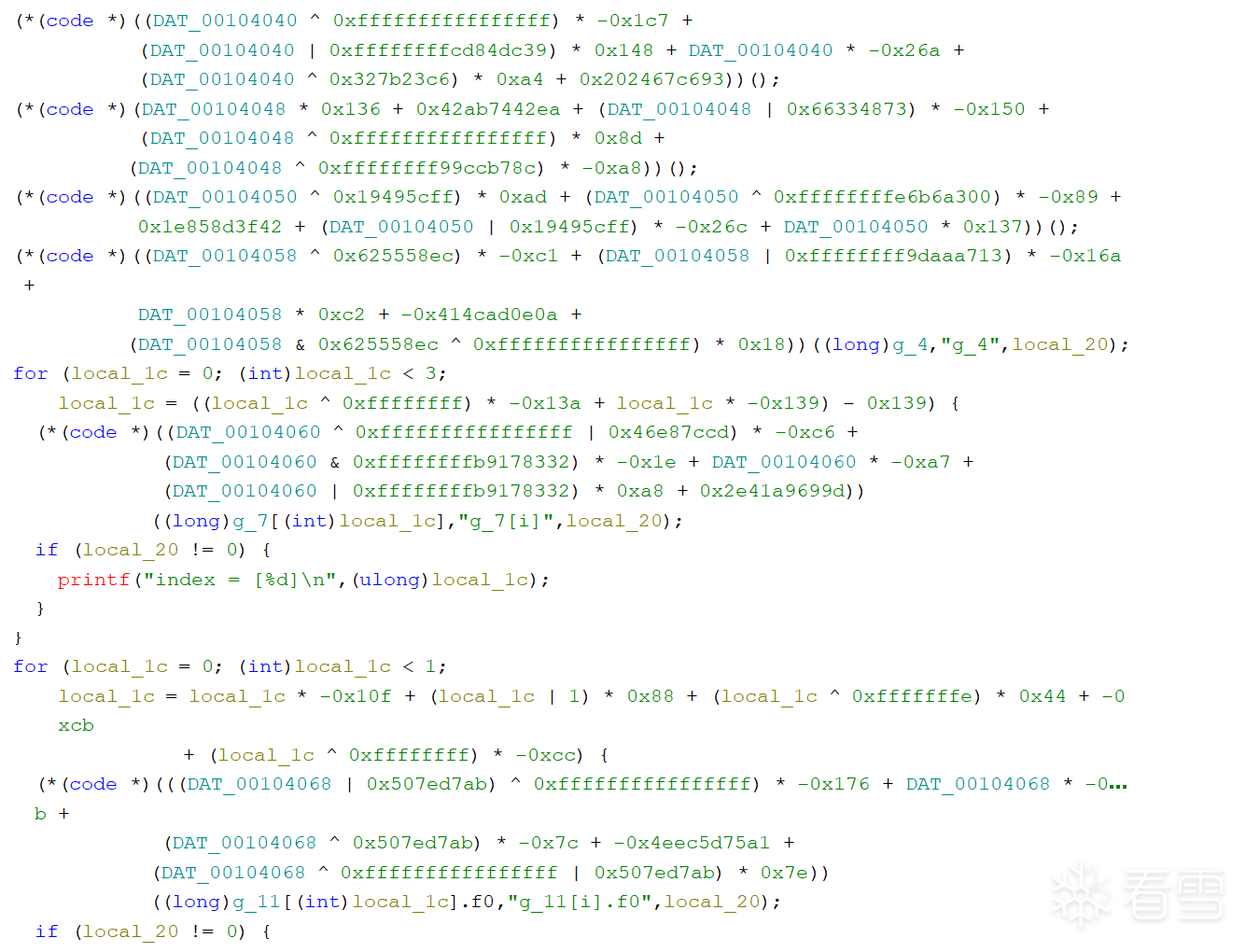
print(f"\nWrote {len(all_patches)} patches -> {OUTPUT_BINARY}")这是IndirectCall+MBA混淆后的:

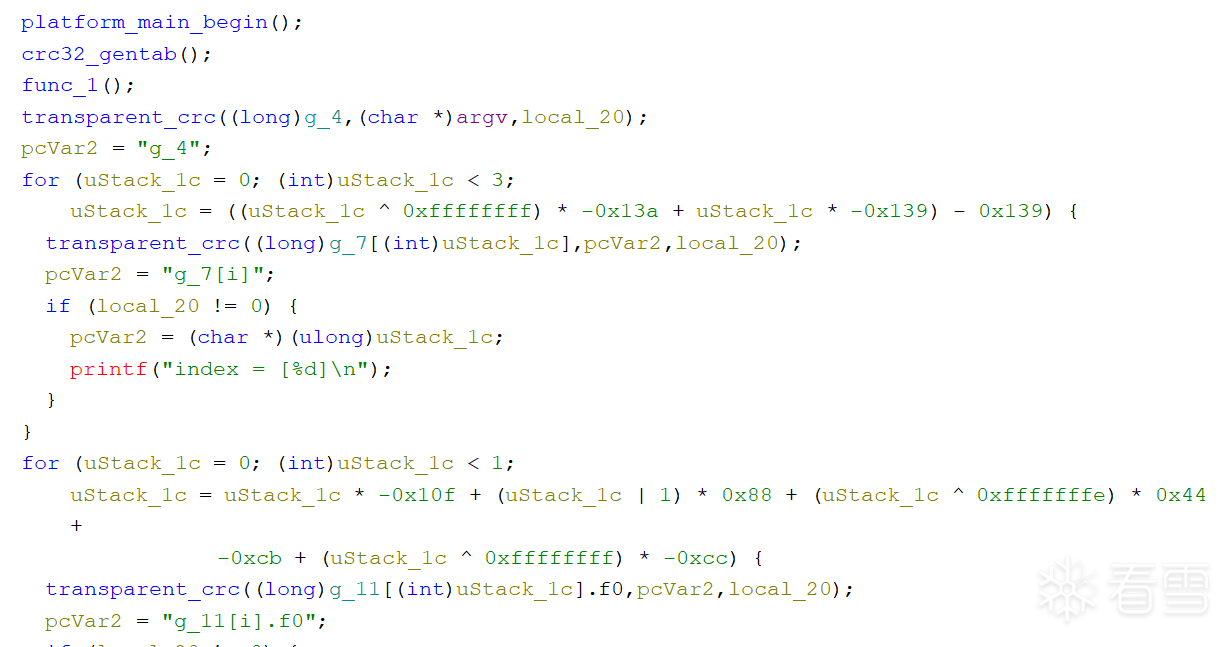
patch后:

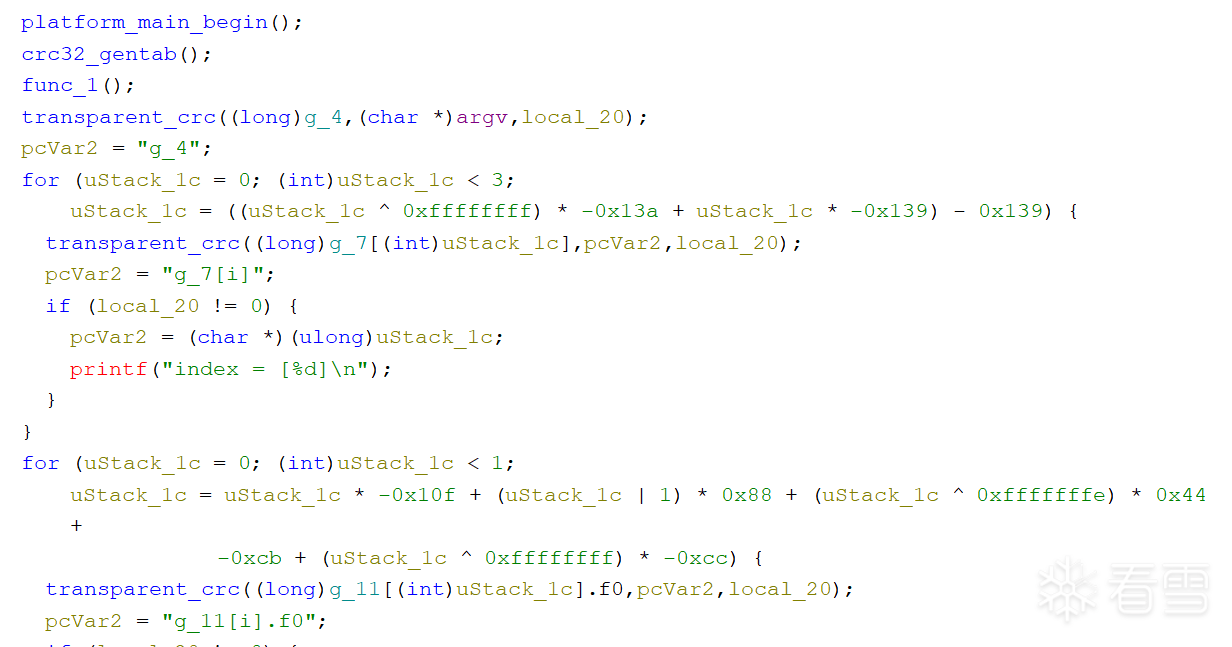
优化后:

可见已经恢复了所有的call。
Limitations
现在只是个prototype,所以还有些缺陷。
代码里有一些硬编码的玩意,比如默认indirect call的寄存器总是rax
该工具会遍历所有的indirect call并尝试patch,或许会影响到一些本来就需要使用indirect call的地方(比如遇到一个jump table)
并未对复杂程序进行大规模测试,性能未知;符号执行收集约束的方法可能会影响到实用性
测试的样本和代码见附件
[培训]Windows内核深度攻防:从Hook技术到Rootkit实战!